How Often Should Businesses Have Security Patrols?
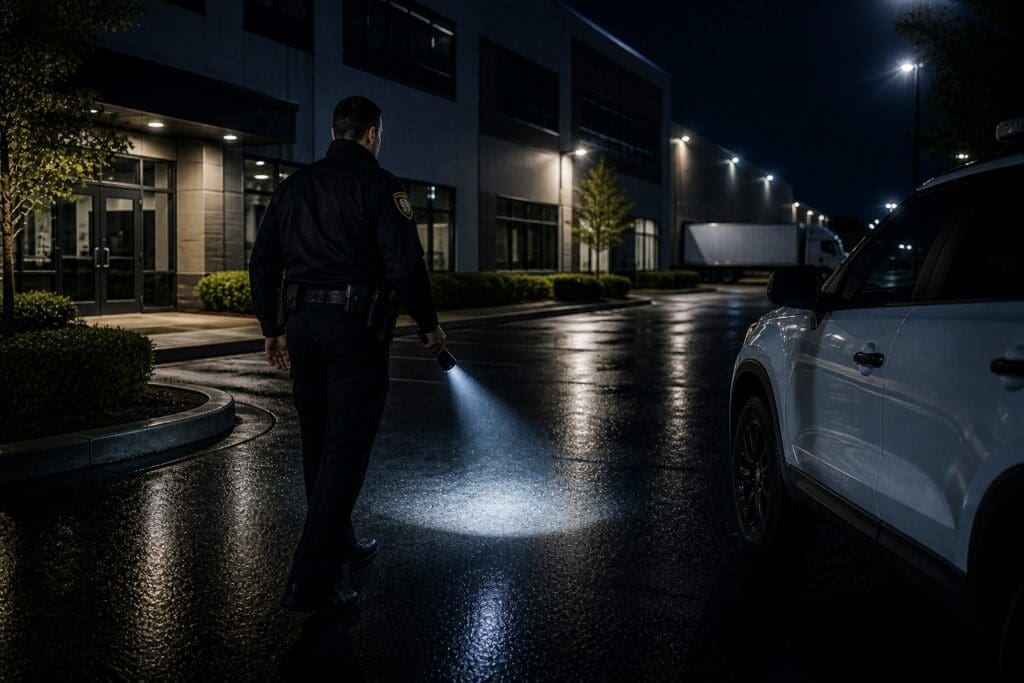
The security schedule that protects your business before problems happen.
One of the most common questions business owners ask is:
“How often should my business have security patrols?”
The honest answer?
It depends on your risk level, operating hours, location, industry, and how attractive your property may appear to criminals.
But one thing is certain:
If your patrols are too predictable… your security may already be predictable too.
Criminals don’t just look for unlocked doors.
They study patterns.
They watch routines.
They notice gaps.
And if they learn exactly when nobody is watching…
That’s when opportunity begins.
So how often should businesses schedule security patrols?
Let’s break it down.
Why Security Patrols Matter
Security patrols do far more than “walk around.”
Professional patrols help:
- Deter suspicious activity
- Identify vulnerabilities early
- Detect unlocked doors
- Check perimeter integrity
- Spot lighting failures
- Prevent trespassing
- Respond to incidents quickly
- Document security concerns
Most importantly…
Visible patrol activity makes criminals think twice.
There Is No One-Size-Fits-All Schedule
Every property is different.
A downtown retail store doesn’t face the same risks as:
- A warehouse
- A medical facility
- A construction site
- A residential complex
- A logistics hub
- An office building
That’s why patrol frequency should be based on risk—not convenience.
Low-Risk Businesses
Examples:
- Small office spaces
- Professional clinics
- Low-traffic administrative buildings
- Daytime-only operations
These businesses may benefit from:
1–2 patrols per night
Focus areas:
- Entry points
- Parking lots
- Rear exits
- Alarm checks
- Lock verification
Even low-risk properties should never appear completely unattended.
Medium-Risk Businesses
Examples:
- Retail stores
- Medical offices
- Apartment complexes
- Mixed-use commercial properties
- Small warehouses
These businesses often benefit from:
3–5 patrols per night
Focus areas:
- Parking activity
- Side entrances
- Employee exits
- Delivery zones
- Visitor traffic
Randomized timing is critical.
High-Risk Businesses
Examples:
- Construction sites
- Equipment yards
- Warehouses
- Cash-heavy businesses
- Luxury retail
- Pharmaceutical storage
- Industrial facilities
These properties often require:
Patrols every 1–2 hours
Or…
Continuous overnight coverage
Focus areas:
- Perimeter breaches
- Equipment protection
- Access control
- Trespassing prevention
- Vehicle activity
- Delivery gates
High-value assets demand higher visibility.
The Biggest Patrol Mistake Businesses Make
Here’s the mistake criminals love:
Predictable patrol schedules.
For example:
Every night…
- 8:00 PM
- 10:00 PM
- Midnight
- 2:00 AM
Same route.
Same timing.
Same routine.
If criminals study your schedule…
They can simply wait.
Better strategy:
Use randomized patrol patterns.
Unpredictability creates uncertainty.
And uncertainty discourages criminal behavior.
When Businesses Need More Patrols
Certain situations increase security risks.
Examples:
After-Hours Operations
If employees work late…
Patrols may need to increase.
Criminals often watch:
- Closing routines
- Staff exits
- Parking lot activity
Recent Security Incidents
If your property recently experienced:
- Theft
- Vandalism
- Trespassing
- Suspicious surveillance
- Vehicle break-ins
Patrol frequency should increase immediately.
Seasonal Risk Periods
During:
- Holidays
- Inventory periods
- Construction phases
- Major deliveries
- Promotional events
Criminal activity often increases.
Patrol schedules should adapt.
Poorly Lit Properties
Dark areas attract unwanted attention.
If your property has:
- Rear blind spots
- Side alleys
- Dumpster zones
- Utility access points
More patrol visibility may be necessary.
Multiple Entry Points
The more access points…
The more opportunities criminals may find.
Businesses with:
- Loading docks
- Employee entrances
- Parking garages
- Delivery bays
- Side gates
Usually require more frequent inspections.
What Happens During A Professional Patrol?
A properly trained security officer may check:
✔ Doors and locks
✔ Windows and gates
✔ Parking lots
✔ Suspicious vehicles
✔ Exterior lighting
✔ Alarm systems
✔ Camera visibility
✔ Perimeter fencing
✔ Unauthorized persons
✔ Delivery and loading areas
And every patrol should be documented.
Patrols vs Static Security Guards
Some businesses ask:
“Should I use patrols—or an on-site guard?”
The answer depends on your needs.
Mobile Patrols
Best for:
✔ Large properties
✔ Multiple locations
✔ After-hours checks
✔ Cost-effective deterrence
On-Site Guards
Best for:
✔ Reception monitoring
✔ Access control
✔ Customer interaction
✔ Continuous visibility
✔ High-traffic environments
Some businesses benefit from both.
How To Know What Your Business Needs
Ask yourself:
- Is my property dark after hours?
- Are there blind spots?
- Do I have multiple entrances?
- Have we had recent incidents?
- Would suspicious activity be noticed quickly?
- Could someone study our routine?
If you’re unsure…
That uncertainty itself may be a vulnerability.
Why Businesses Trust Professional Patrol Services
Churchgate Protective Services helps businesses stay ahead with:
- Licensed security professionals
- Randomized mobile patrol services
- Risk-based security assessments
- Incident reporting
- Access control support
- 24/7 protection planning
Every business is different.
Your patrol strategy should be too.
So… How Often Should Your Business Have Security Patrols?
Often enough that criminals never know when someone is watching.
Schedule Your Free Security Assessment Today
Because the best patrol schedule…
Is the one criminals can’t predict.