How Much Do Security Guard Services Cost in Brooklyn? (2026 Pricing Factors)
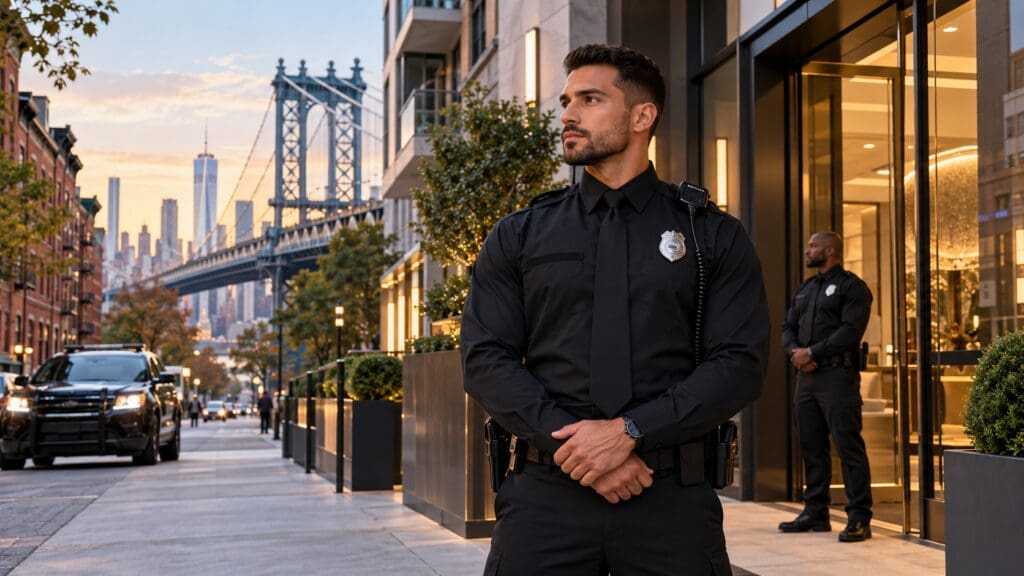
Hiring a private security firm is one of the most critical decisions a Brooklyn property manager, business owner, or event coordinator can make. However, when the initial vendor proposals arrive, many are surprised by the variations in pricing. One agency might quote a rate that is double what another charges, often leaving buyers to wonder: What exactly am I paying for?
In major metropolitan areas like New York City, security pricing scales roughly 20% to 40% higher than national averages due to strict municipal mandates, intensive training standards, and massive localized insurance liabilities.
Whether you are securing a commercial high-rise in Downtown Brooklyn, a residential building complex in Williamsburg, or an active development site along the Sunset Park waterfront, this guide provides an honest, transparent breakdown of what security guard services cost in Brooklyn right now.
The Baseline: Average Hourly Security Rates in NYC
Private security agencies charge a bill rate—the total hourly amount a client pays the agency—which covers the guard’s wages, background screenings, uniforming, specialized equipment, overhead, and company insurance.
Because New York City represents an inherently high-cost, high-risk market, pricing strictly sits at the upper tier of vendor guides.
| Service Classification | Average Hourly Bill Rate (NYC Market) | Common Brooklyn Use Cases |
| Standard Unarmed Guard | $25 – $45 / hr | Retail storefronts, residential lobbies, low-risk corporate offices |
| Armed Security Officer | $45 – $75+ / hr | Financial institutions, high-end retail, cannabis dispensaries, high-risk assets |
| Fire Watch Services (F-01/F-03) | $35 – $55 / hr | Construction zones with compromised alarms, temporary hot-work sites |
| Mobile Patrol (Per Visit) | $35 – $75 / visit | Multi-unit residential complexes, industrial yards, perimeter checks |
| Executive Protection (VIP Detail) | $60 – $150+ / hr | High-net-worth individuals, high-profile events, celebrity details |
Key Factors Driving Your Brooklyn Security Quote
1. Armed vs. Unarmed Tiers
The presence of a firearm is the single largest factor affecting your base hourly rate, often driving costs up by 30% to 50%.
- Unarmed Guards: Ideal for access control, customer service, and visible deterrence. According to National Protective Service’s Framework, these officers focus on observation and report protocols.
- Armed Guards: Required for high-value asset transfers or severe threat levels. The premium you pay for an armed guard does not just go toward a higher hourly wage; it accounts for intense state licensing, ongoing tactical training, and exponentially higher commercial liability insurance premiums passed down by the agency. As explored by insurance insights on BPeak Digital, armed operations regularly require surplus-lines placement and heavy assault-and-battery legal riders, which drastically skews the bill rate upward.
2. Shift Lengths and Coverage Hours (The 24/7 Premium)
Continuous perimeter or building protection is a heavy operational investment. If your property requires round-the-clock coverage, your annual security bill will stack quickly.
- On-Going 24/7 Security: Providing year-round, 24-hour protection typically requires rotating four separate full-time guards to eliminate individual overtime, averaging an ongoing monthly cost between $30,000 and $55,000+.
- The Overtime Risk: Under federal and New York state labor laws, overtime kicks in at 1.5x pay after 40 hours a week. If a security company scales a single guard into long 12-hour shifts rather than properly staggering personnel, those overtime expenses are directly passed down to your invoice.
3. Shift Timing and Short-Notice Surge Pricing
Standard business hours yield baseline pricing, but security risks change when the sun goes down.
- Shift Differentials: Overnight shifts (typically 10 PM to 6 AM) and weekend hours carry a premium inflation of 10% to 25% to secure reliable personnel.
- Holidays: Requesting coverage on standard federal holidays spikes prices significantly, with mandated premiums ranging from 1.5x to 2x the standard hourly base.
- Short-Term vs. Contract: Long-term, multi-month contracts enjoy stable, discounted baseline pricing. Conversely, emergency coverage requests or short-duration event security (e.g., pop-up retail galleries in DUMBO or short concert venues) command immediate surge premiums due to mobilization constraints.
4. Specialized FDNY Fireguard Coverage
In Brooklyn’s booming construction and real-time real estate market, standard guard licenses occasionally fall short. If a building’s fire alarm system or structural sprinkler network becomes impaired during renovations, the Fire Department of New York (FDNY) legally requires dedicated Fire Watch Services.
Personnel working these roles must hold specific FDNY Certificates of Fitness (such as the F-01 Citywide Fire Guard for Impairment or F-03 Indoor Fire Guard license). Because these guards must satisfy explicit municipal safety compliance, their hourly rates sit roughly $5 to $15 higher than an entry-level unarmed guard.
5. Rigorous Compliance and Training Requirements
New York enforces some of the strictest background and training mandates in the country. Per the state’s regulatory baseline, a guard cannot step onto a property without completing a mandated fingerprinting background check, an initial 8-Hour Pre-Assignment Training course, and a subsequent 16-Hour On-the-Job Training course.
When you hire a cheap, unvetted provider operating cut-rate prices, you risk facing massive negligent security lawsuits if an uncertified guard commits an infraction on your premises. Reputable agencies build extensive ongoing training—including modern de-escalation tactics and critical emergency response—directly into their bill rate, ensuring full corporate compliance.
How to Optimize Your Security Budget
To secure the highest value for your physical security framework without overpaying, implement these tactical steps before signing a vendor contract:
- Conduct a Threat Assessment: Map out your actual site vulnerabilities. If customer care, access control, and low-level deterrence are your main goals, opt entirely for unarmed guards.
- Utilize a Hybrid Staffing Model: Avoid paying flat armed rates for your entire perimeter. Many large Brooklyn residential spaces mix their logistics: placing a highly trained, armed supervisor at the primary high-risk cash or entrance vault while staffing secondary gates and lobbies with affordable unarmed personnel.
- Incorporate Mobile Guard Patrols: If constant static presence is not required, contract a vendor for randomized mobile patrol sweeps. A patrol unit checking your warehouse property three to four times a night is significantly more affordable than paying an active 8-hour static shift rate.