Phygital Security: How Digital Verification Replaces Blind Trust in Physical Guarding
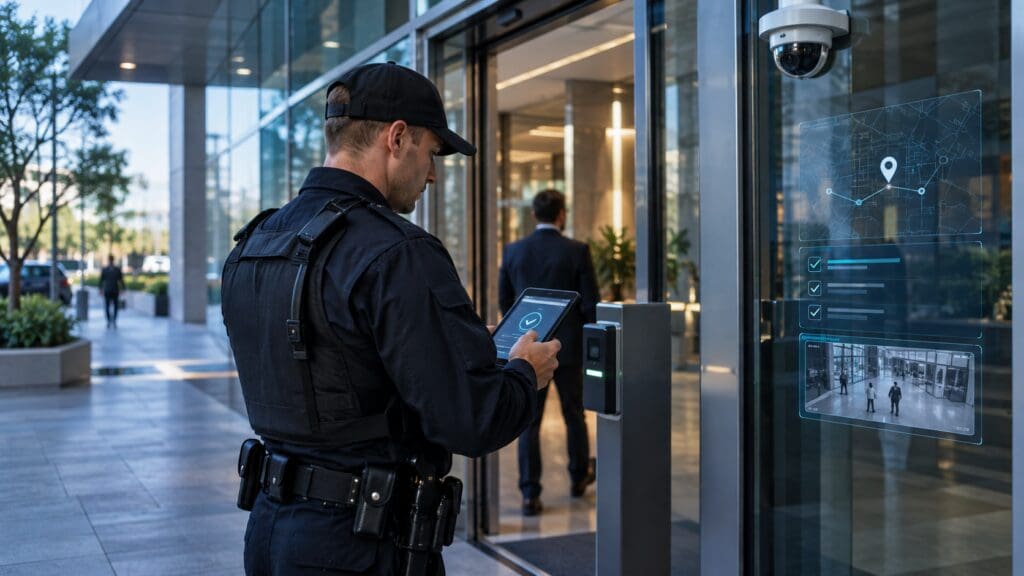
In physical security management, the gap between perceived security and actual security often boils down to one issue: proof.
For years, property managers and enterprise security leads relied on paper sign-in sheets, unverified patrol logs, and blind trust. However, as the global physical security market accelerates toward a projected valuation of over $250 billion, traditional, unverified physical security models are rapidly becoming liability hazards. (Source: Precedence Research – Physical Security Market Size)
Enter Phygital Security—a convergence of tactical physical presence and immutable digital verification. Companies like Churchgate Protective Services (CPS) are pioneering this shift, transforming security from a passive expense into a data-driven, fully accountable asset.
What is Phygital Security?
Phygital Security bridges the gap between physical guard operations and digital tracking systems. Rather than choosing between on-site security personnel or standalone digital monitoring (like CCTV), phygital security unifies both. Tactical personnel perform physical patrols, while digital tools dynamically log, verify, and report every checkpoint and incident in real time.
| TACTICAL PHYSICAL PRESENCE | REAL-TIME DIGITAL VERIFICATION |
| On-Site Security OfficersVisible, trained personnel providing physical authority and site management. | GPS & NFC Checkpoint VerificationImmutable, time-stamped proof of patrol completion along every route. |
| Active Physical DeterrenceImmediate intervention against unauthorized access, theft, and trespass. | Instant Incident DashboardsReal-time visibility into active hazards, alerts, and officer locations. |
| Rapid Crisis InterventionDe-escalation, emergency response, and dynamic on-site decision making. | Audit-Ready Time-Stamped LogsDefensible, digital compliance reporting for insurers and management. |
This hybrid model solves the long-standing industry dilemma: human guards provide immediate physical deterrence and intervention, while digital systems guarantee full operational transparency. Learn more about the broader trend in modern security architectures at Gartner – Cybersecurity & Risk Management Insights.
The Costs of “Blind Trust” in Physical Security
Relying solely on traditional guard services without digital verification leaves organizations vulnerable to structural security blind spots:
- Unverified Patrols: Without electronic verification, there is no proof that scheduled patrols occurred at critical times or specific locations.
- Delayed Incident Reporting: Paper logs often delay hazard or breach disclosures by hours or days, stalling critical response times.
- Compliance & Liability Risks: When security incidents occur, unverified paper records often fail to withstand legal scrutiny or insurance claim reviews.
Industry operational benchmarks indicate that facilities transitioning from manual logbooks to real-time digital guard management systems see tour completion rates jump from 65%–75% up to 93%–98% within 60 days. Furthermore, real-time guard tracking implementations reduce reporting errors and operational delays by over 30%. Explore guard tour technology standards at ASIS International – Security Standards & Guidelines.
How Enforced Accountability Drives Measurable Security
Moving to a phygital model shifts the paradigm from blind trust to enforced accountability. Digital verification equips facility leads with clear, verifiable evidence across three core operational areas:
1. Proof of Patrol Activity
Digital verification uses techniques such as NFC (Near Field Communication) tags, QR checkpoints, and GPS geofencing. Guards must scan specific physical checkpoints along their route, generating time-stamped digital verification that cannot be altered or retroactively filled out. Read about NFC standards at the NFC Forum Specification Overview.
2. Verified Checkpoint Completion
Instead of relying on estimated patrol windows, real-time tracking provides exact timestamps for every site visit. Operations managers can review live dashboards showing active guard movements, identifying skipped checkpoints or irregular patterns as they happen.
3. Immediate, Data-Rich Security Reporting
When a security officer encounters a hazard—such as a compromised lock, water leak, or unauthorized visitor—the issue is logged immediately via a mobile application complete with photo/video evidence and precise location tags. Real-time digital escalation can reduce average incident response times by up to 28%.
Key Comparison: Traditional Security vs. Phygital Security
| Feature | Traditional Physical Security | Phygital Security (CPS Model) |
| Verification Method | Manual paper logs / Sign-in books | Digital NFC / GPS Checkpoint Scanning |
| Visibility | Post-shift reviews or end-of-month summaries | Real-time live dashboard monitoring |
| Incident Escalation | Delayed oral or written reporting | Instant digital notification with photo proof |
| Data Integrity | Prone to human error, missed entries, or pencil-whipping | Immutable, time-stamped digital record |
| Accountability | High reliance on blind trust | Enforced, measurable compliance metrics |
Frequently Asked Questions (FAQs)
What is the difference between physical security and phygital security?
Physical security relies on human guards, locks, and physical barriers to secure a location. Phygital security combines physical guards with digital verification technologies (like GPS, NFC checkpoints, and real-time reporting apps) to ensure every patrol and checkpoint is verified with data.
How does digital checkpoint verification prevent guard falsification?
Digital checkpoint systems require security guards to physically scan electronic tags (e.g., NFC chips or geofenced coordinates) using a handheld device. The system automatically logs the exact time and GPS coordinates, preventing guards from manually forging timestamps or logging patrols they didn’t complete.
Why are companies moving away from traditional security logging?
Traditional paper logging creates significant liability, lacks real-time oversight, and frequently results in low patrol completion rates (averaging 65%–75%). Digital guard management solutions increase patrol compliance up to 98% and deliver audit-ready data for compliance and insurance purposes. See industry risk insights at NFPA – Facility Safety Standards.
Transitioning Your Facility to Measurable Security
Security is no longer just about placing a physical guard at a gate; it’s about verifying that every perimeter, checkpoint, and vulnerability is actively monitored. Embracing phygital security eliminates uncertainty and ensures your security investments deliver verified protection.
Ready to eliminate blind trust and establish enforceable accountability across your property? Schedule a Security Assessment with Churchgate Protective Services Today to audit your current security posture.