When the Room Matters: Security Planning for High-Profile Events and Executive Appearances in NYC
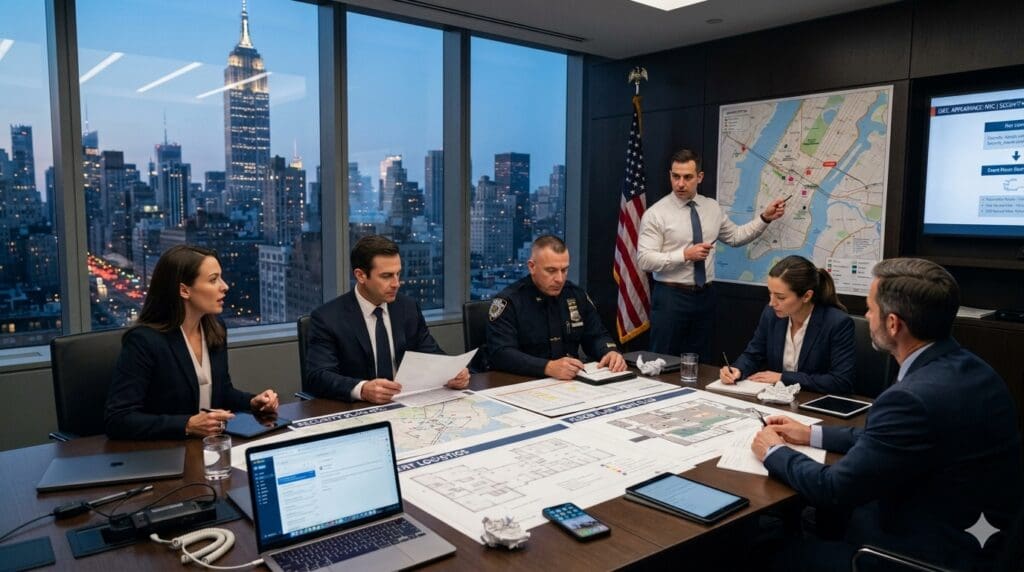
Quick Answer: What Security Does a High-Profile Event Need?
A high-profile event needs a security plan built around the venue, speaker or executive, guest list, public visibility, access points, crowd size, schedule, and known risks. Professional coverage may include advance planning, entrance control, credential checks, perimeter patrols, restricted-area monitoring, crowd observation, emergency communication, and protected arrival and departure procedures.
The security team should be visible where reassurance and control are needed, while remaining discreet around speakers, executives, invited guests, and the main program.
When the room matters, security should already be ready.
Not All Event Security Is Created Equal
Some events need basic entrance monitoring. Others bring together business leaders, public speakers, executives, media representatives, community figures, investors, employees, invited guests, or members of the public.
These events may carry higher expectations and more complex risks. A disruption can affect personal safety, business operations, public confidence, brand reputation, and the event schedule.
Professional event security is not limited to placing someone beside a door. It requires:
- Presence that helps deter disruptive behavior
- Control over who can enter restricted areas
- Awareness of activity inside and outside the venue
- Communication between security, organizers, venue staff, and emergency contacts
- Preparation for changes in the schedule, crowd, or risk level
- Discretion so protection does not distract from the event
The Cybersecurity and Infrastructure Security Agency’s Mass Gathering Security Planning Tool gives event planners a framework for developing risk-informed plans. CISA also recommends planning for security, emergency response, emergency communication, and continuity before a large gathering takes place.
What Makes an Event High Profile?
An event does not need a celebrity guest to require advanced planning. Its profile may rise because of the people attending, the topic being discussed, the public interest it attracts, or the possible effect of a disruption.
Examples include:
- Executive speeches and leadership meetings
- Corporate conferences and investor events
- Product launches and media appearances
- Political, civic, or community discussions
- Award ceremonies and formal galas
- Religious or nonprofit gatherings with prominent guests
- Private events involving public figures
- Events involving sensitive or controversial topics
- Commercial events with valuable products, equipment, or information
- High-traffic gatherings open to the public
The right level of security depends on the specific event. A private boardroom discussion requires a different plan from a public conference, executive keynote, outdoor appearance, or media event.
Event Security and Executive Protection Are Different
These services may work together, but they do not serve the same purpose.
Event security focuses on the venue and the gathering. It can include guest access, crowd monitoring, restricted areas, patrols, incident response, and coordination with event organizers.
Executive or personal protection focuses more closely on an individual. It may involve advance review, protected movement, arrival and departure planning, schedule coordination, and close support based on the person’s risk and needs.
Churchgate Protective Services provides event security and offers executive and personal security services on a limited, customized basis. Organizers should explain exactly who is attending, what support is expected, and whether the concern relates to the venue, the individual, or both.
Eight Parts of a Strong High-Profile Event Security Plan
1. Conduct an advance risk review
Security planning should start before the day of the event.
Review:
- The venue layout and surrounding area
- The speaker, executive, or featured guest
- Expected attendance and guest profile
- Whether the event is public, private, ticketed, or invitation-only
- Media coverage and public promotion
- Sensitive topics, known concerns, or previous incidents
- Parking, loading, drop-off, and rideshare areas
- Main, secondary, staff, vendor, and emergency entrances
- Backstage rooms, offices, holding areas, and restricted corridors
- Emergency exits and assembly locations
A site walkthrough can reveal blind spots, unsecured service doors, shared hallways, poor lighting, or access points that may not be clear from a floor plan.
2. Plan the speaker’s or executive’s arrival
Arrival can be one of the most exposed moments. Organisers should decide where the person will enter, who will meet them, which route they will take, and where they can wait privately before appearing.
The arrival route should not become a public gathering point unless that is part of the planned program. Security and event staff should know the expected arrival time, approved vehicle information when appropriate, and who is authorized to approach the guest.
Any schedule information should be shared only with people who need it.
3. Control access by area, not only at the front door
A guest may be allowed inside the venue without being authorized to enter every room.
Divide the site into clear areas, such as:
- Public guest area
- Registration area
- Media area
- Staff and vendor area
- Speaker or executive holding room
- Backstage or preparation space
- Equipment and storage rooms
- Emergency access routes
Use badges, wristbands, guest lists, tickets, or other credentials that staff can check quickly. Decide in advance how to handle missing names, transferred invitations, unexpected guests, expired credentials, and people requesting access beyond their approved area.
4. Position security where decisions happen
A guard’s location should be based on purpose.
Possible positions include:
- The main guest entrance
- Registration and credential check-in
- Staff and service entrances
- Corridors leading to restricted rooms
- The stage or speaker access route
- Parking, drop-off, and loading areas
- Perimeter patrol routes
- A central post with contact to event leadership
Security officers should be able to see what matters, communicate with the organizer, and respond without leaving another important area unmonitored.
5. Prepare for crowd movement
Crowd pressure often develops during doors opening, speaker arrival, program changes, breaks, photo opportunities, and the end of the event.
Plan how guests will move through:
- Queues and registration
- Screening or credential checks
- Lobbies and narrow corridors
- Seating areas
- Restrooms and refreshment spaces
- Stage-front or photo areas
- Exits after the program
Clear signs, barriers, trained event staff, and visible security can reduce confusion. Emergency exits must remain clear throughout the event.
6. Build a communication structure
Everyone should know who has authority to make security and operational decisions.
Before the event, confirm:
- The lead event organizer
- The security supervisor or primary officer
- The venue contact
- The executive or speaker’s authorized representative
- The emergency contact process
- Radio channels or phone numbers
- Words used to report urgent situations clearly
- Who can pause, change, or end the program
Guards should receive updates when the schedule, guest list, room assignment, or arrival route changes.
7. Protect the departure
Security planning should continue after the speech, meeting, or appearance ends.
The featured guest may need a clear route away from crowds, media, or unplanned conversations. Event attendees may leave all at once, creating pressure around elevators, sidewalks, parking areas, and rideshare zones.
Confirm the departure route, vehicle or pickup location when applicable, staff closing procedures, and how long security coverage will remain after the program.
8. Document and review important incidents
Security officers should record significant access problems, disruptions, medical events, suspicious activity, property issues, and emergency actions according to the site’s procedures.
After the event, organizers can review what worked and what should change. This is especially useful for organizations that host repeated executive meetings, conferences, community programs, or public appearances.
How Professional Security Protects Without Disrupting the Moment
Strong security should support the atmosphere of the event.
At a corporate conference, officers may need to look polished and help guests find the right entrance. At a public meeting, they may need to remain highly visible and monitor crowd behavior. During an executive appearance, they may need to stay close enough to respond while avoiding unnecessary attention.
This balance depends on preparation, communication, and professional judgment. Loud or aggressive behavior from security can create tension. Weak control can allow confusion to spread. The goal is a calm, consistent presence that supports the program and protects the environment.
What Unarmed Security Guards Can Do at a High-Profile Event
Depending on the security plan and assigned duties, unarmed guards may:
- Monitor entrances and exits
- Check invitations, tickets, identification, or approved credentials
- Guide attendees and manage lines
- Watch restricted rooms and backstage routes
- Conduct interior and exterior foot patrols
- Observe crowds for developing concerns
- Respond to disturbances within their training and authority
- Contact law enforcement or emergency services when needed
- Support evacuation, shelter, or emergency communication procedures
- Document incidents and unusual activity
- Coordinate with venue staff and event leadership
- Help maintain order during closing and departure
The New York State Department of State lists surveillance, patrol, access control, alarm response, incident documentation, and visitor assistance among the duties performed by registered security guards.
Questions to Ask Before Booking High-Profile Event Security
Ask the security provider:
- Will you conduct a site and event review?
- Are the assigned officers registered and trained under New York requirements?
- Who will prepare the post orders and deployment plan?
- Can the coverage support both venue security and the featured individual’s needs?
- Who will supervise the security team?
- How will officers communicate with organizers and venue staff?
- How will guest credentials and restricted areas be managed?
- Does the schedule include setup, arrival, the event, departure, and closing?
- How are incidents documented and reported?
- What information is needed about the speaker, executive, or VIP guest?
A quote should be reviewed alongside the actual coverage plan. Price alone does not show whether the team understands the venue, schedule, access structure, or level of attention required.
NYC Event Permits and Public-Space Requirements
Events using streets, sidewalks, plazas, parks, or other public areas may require permits or coordination with New York City agencies. The NYC Mayor’s Office of Citywide Event Coordination and Management provides information about city event permitting, while the NYPD permits page explains requirements for certain parades, processions, demonstrations, and athletic events.
Private security does not replace permits, police services, fire-safety requirements, emergency medical support, or venue obligations. Organisers should confirm which requirements apply to their event and location.
Frequently Asked Questions
What is high-profile event security?
High-profile event security is planned coverage for gatherings involving prominent speakers, executives, public figures, sensitive topics, valuable assets, media attention, or higher-than-normal public interest. It may include access control, patrols, crowd observation, restricted-area protection, and executive support.
Does every executive appearance require executive protection?
No. The level of support should be based on the person’s profile, known risks, venue, audience, schedule, and event type. Some appearances may only need structured event security and controlled access. Others may require customized personal protection planning.
How early should organizers book security in New York City?
Contact a provider as soon as the venue, date, featured guest, and approximate attendance are known. Early planning allows time for a walkthrough, risk review, staffing, post orders, credential procedures, and coordination with the venue.
How many guards are needed for a high-profile event?
There is no single number that fits every event. Staffing depends on the venue layout, entrances, crowd size, restricted areas, program schedule, public access, parking, and the featured guest’s requirements.
Can security remain discreet during an executive appearance?
Yes. The deployment can be planned so officers are visible at access points and key areas while providing more discreet support near the speaker, executive, or main program.
What information should an organizer share with the security provider?
Share the venue layout, schedule, expected attendance, guest-access process, featured speakers, public promotion, media attendance, restricted areas, vendor list, emergency contacts, and any known concerns that could affect planning.
When Leaders Speak, Security Should Already Be Ready
A high-profile event should not wait for a disruption before the security plan becomes clear. The venue, people, access points, arrival route, communication structure, and emergency steps should be reviewed before the first guest enters.
Churchgate Protective Services provides professional unarmed event security for corporate gatherings, private events, commercial properties, churches, concerts, clubs, and community events across New York City. Limited executive and personal security services are available on a customized basis.
To discuss security for an executive appearance, high-profile speaker, corporate event, private gathering, or high-risk environment, contact Churchgate Protective Services.
Churchgate Protective Services
747 Lexington Ave. Suite 1
Brooklyn, NY 11221
Phone: (718) 498-5960
Email: info@churchgatecorp.com
Disclaimer: This article provides general security-planning information. Event organizers should confirm applicable permit, licensing, venue, fire-safety, and emergency requirements with the appropriate authorities.