Why Are People So Scared of Working in Security?
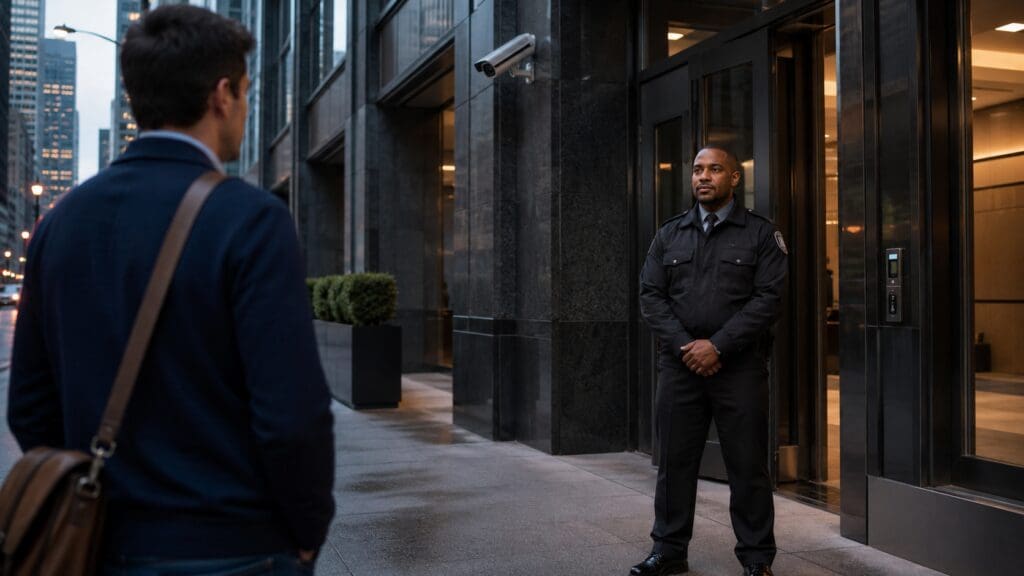
Mention a career as a security guard, and some people immediately think about fights, dangerous situations, overnight shifts, or standing face-to-face with criminals.
That perception is understandable—but it does not tell the whole story.
Professional security work can involve risk, but the job is not simply about confronting dangerous people. Security guards perform a wide range of responsibilities, including monitoring entrances, controlling access, patrolling properties, observing surveillance systems, documenting incidents, helping visitors, and responding appropriately when something unusual happens.
So why are people still afraid of entering this line of work?
1. People Associate Security With Danger
This is probably the biggest reason.
Security professionals are often placed where protection is needed, so people naturally assume they will constantly be dealing with dangerous situations.
There is some real risk involved. The National Institute for Occupational Safety and Health notes that workers in protective-service occupations face an elevated risk of workplace violence compared with many other occupations.
But risk can vary significantly depending on the assignment.
Working security at a commercial office building is very different from working at a crowded event, hospital, high-risk property, construction site, retail location, or other challenging environment.
A professional security program should consider the risks of the specific location and provide appropriate training, procedures, staffing, communication, and supervision.
2. Movies and Social Media Show the Most Extreme Situations
Most people do not see the everyday work of a professional security officer.
Instead, they see security guards in movies, viral videos, or news reports when something dramatic happens.
That can create the impression that security work is mainly about:
- Fighting
- Chasing people
- Physically removing someone
- Stopping criminals
- Handling emergencies
Those situations may happen, but much of professional security is actually preventive.
According to the U.S. Bureau of Labor Statistics, typical security guard duties include patrolling property, monitoring alarms and surveillance systems, controlling access, conducting security checks, responding to emergencies, and writing reports.
In many situations, preventing a problem from happening is more important than physically responding after something goes wrong.
3. People Think Security Guards Have to Act Like Police Officers
This is another common misunderstanding.
Security guards and police officers have different responsibilities, training requirements, and legal authority.
Security professionals generally focus on protecting a specific property, organisation, event, or group of people.
Depending on the assignment, a guard may spend much of the shift:
- Checking identification
- Monitoring entrances
- Keeping visitor logs
- Conducting patrols
- Watching security cameras
- Reporting suspicious activity
- Helping employees and visitors
- Documenting incidents
- Contacting emergency services when necessary
New York State itself describes security guard responsibilities as including surveillance, patrol, access control, responding to alarms or emergencies, maintaining reports, and assisting people while maintaining a professional security presence.
4. They Worry About Being Unprepared
People may also think:
“What happens if something serious happens and I don’t know what to do?”
That concern is exactly why training matters.
In New York State, individuals working as security guards must meet registration and training requirements.
For example, an unarmed New York security guard generally must complete an 8-hour pre-assignment training course, followed by a 16-hour on-the-job training course within 90 days of employment, along with required annual training. Armed security guards have additional firearms-related requirements.
Training covers areas such as security responsibilities, emergency situations, communication, public relations, access control, legal limitations, ethics, and other job-specific responsibilities.
Security work should not simply be about putting on a uniform and hoping nothing goes wrong.
Professionalism comes from preparation.
5. Night Shifts and Long Hours Can Sound Intimidating
Security is often required outside normal business hours.
Office buildings, residential properties, hotels, construction sites, healthcare facilities, events, and other locations may need protection at night, on weekends, or around the clock.
The Bureau of Labor Statistics notes that security guards commonly work shifts and that night shifts are common.
That schedule will not suit everyone.
However, the variety of security environments also means that different types of schedules and assignments may be available depending on the employer and location.
Is Being a Security Guard Actually a Career?
Yes. Security can be a long-term career rather than simply a temporary job.
Security professionals can build experience in areas such as:
- Commercial property security
- Residential security
- Access control
- Event security
- Mobile patrol
- Construction site security
- Healthcare security
- Retail security
- Security operations
- Supervision and management
The industry also employs a substantial number of people.
The Bureau of Labor Statistics reported approximately 1.28 million security guard jobs nationally in May 2025.
There is also visible demand locally. A New York State Department of Labor briefing listed 468 security guard openings in the New York City area through the NYS Job Bank as of May 8, 2026.
What Makes Someone Good at Security Work?
Being physically strong is not the only thing that matters.
Some of the most valuable qualities are much less dramatic:
Observation.
Noticing something unusual before it becomes a bigger problem.
Communication.
Speaking professionally with visitors, employees, contractors, customers, and emergency responders.
Calm decision-making.
Knowing how to respond without making a difficult situation worse.
Professionalism.
Representing both the security company and the property appropriately.
Reliability.
Being where you are supposed to be, staying alert, and following procedures.
Good judgment.
Understanding when to intervene, when to report, and when to contact law enforcement or emergency services.
The Bureau of Labor Statistics specifically identifies communication, interpersonal, observation, and problem-solving skills as important qualities for security professionals.
So, Should You Be Scared of a Security Career?
It is reasonable to respect the risks involved.
Security professionals sometimes work in challenging environments, and pretending there is no risk would be unrealistic.
But being aware of risk is different from being afraid of the entire profession.
Good security work is built around preventing problems, remaining observant, following procedures, communicating clearly, and knowing how to respond when something happens.
With proper training, responsible supervision, and the right assignment, security can provide people with an opportunity to develop practical skills while helping protect businesses, properties, employees, residents, visitors, and communities.
Security Careers in New York City
For individuals considering a security guard career in New York City, understanding the profession before entering it is important.
Learn the requirements.
Complete the proper training.
Understand your responsibilities.
Work with an organisation that values professionalism and preparation.
Churchgate Protective Services provides professional security services across New York and works with trained security personnel supporting commercial properties, events, businesses, residential locations, and other environments.
Interested in exploring opportunities in professional security? Visit the Churchgate Protective Services Careers page to learn more about joining the team.
Frequently Asked Questions
Is working as a security guard dangerous?
Security work can involve risk, but the level of risk depends heavily on the location, assignment, working conditions, and responsibilities. Proper training, procedures, communication, staffing, and supervision are important parts of managing that risk.
Do security guards have to fight people?
No. Physical confrontation is not the main purpose of professional security. Much of the job involves observation, access control, patrols, reporting, communication, deterrence, and responding according to established procedures.
Do you need training to become a security guard in New York?
Yes. New York State requires security guards to register and complete approved training. Unarmed guards generally begin with an 8-hour pre-assignment course and must complete additional on-the-job and annual training requirements.
Is security a good career in NYC?
Security can provide opportunities across commercial buildings, residential properties, retail locations, construction sites, events, hospitality, healthcare, and many other environments. New York City continues to have security guard job opportunities across different sectors.
What skills do security guards need?
Observation, communication, interpersonal skills, professionalism, problem-solving, reliability, and the ability to remain calm during stressful situations are particularly important.
References
- U.S. Bureau of Labor Statistics — Occupational Outlook Handbook: Security Guards and Gambling Surveillance Officers. Provides information about security guard duties, work environments, training, schedules, skills, wages, and employment outlook.
- U.S. Bureau of Labor Statistics — Occupational Employment and Wage Statistics, May 2025. National employment and wage data for security guards.
- New York State Department of State — Become a Security Guard. Official information regarding New York security guard registration, qualifications, responsibilities, and application requirements.
- New York State Department of State — Security Guard Training Requirements. Official requirements for unarmed and armed security guard training in New York.
- New York State Division of Criminal Justice Services — Security Guard Training. Information regarding mandatory security guard courses and approved training requirements.
- CDC / National Institute for Occupational Safety and Health — Violence and Work. Federal information concerning workplace violence and occupational risk.
- CDC / NIOSH — Indicators of Workplace Violence. Federal research examining workplace violence across occupations, including protective-service workers and security guards.
- New York State Department of Labor — New York City Labor Market Briefing, March 2026. Includes current NYC occupational job-posting information, including security guard openings.