Why Brooklyn Tech Hubs and Luxury Condos Are Upgrading to Hybrid Physical Security
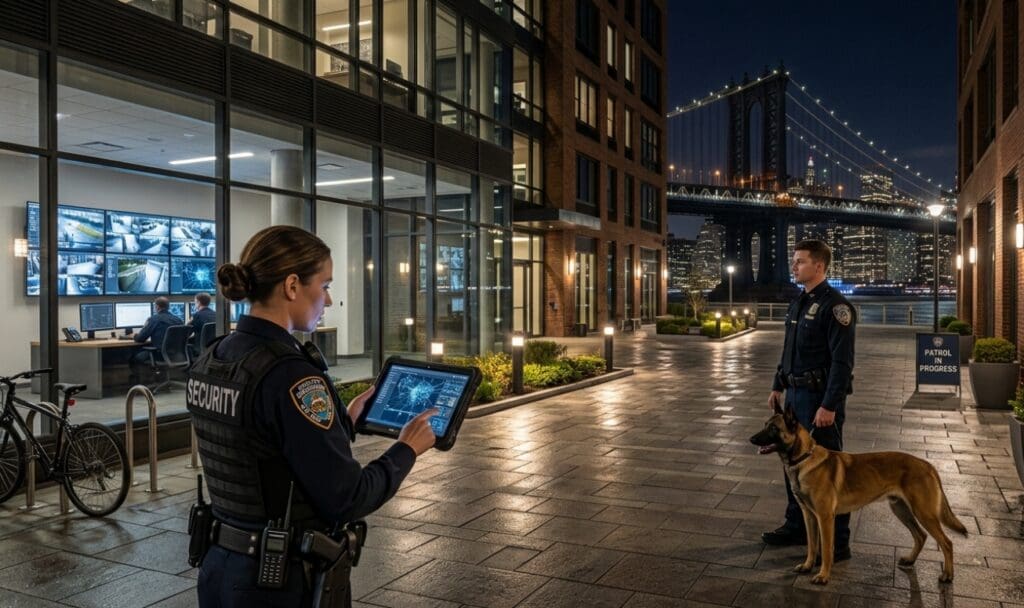
Brooklyn’s real estate landscape is undergoing a massive transformation. From the bustling startup spaces in DUMBO to the booming luxury residential markets in Williamsburg and Brooklyn Heights, property values and tenant expectations are at an all-time high.
With the median Brooklyn luxury home price soaring past $3.1 million, property managers and commercial developers are realizing that traditional security measures—like a single guard stationed at a desk or an unmonitored CCTV camera—are no longer sufficient.
The industry is rapidly shifting toward hybrid physical security. This modern framework blends highly trained on-site security professionals with cutting-edge, cloud-connected technology. Here is an in-depth look at why Brooklyn’s tech hubs and elite residential complexes are making the upgrade.
What is a Hybrid Physical Security Model?
A hybrid security model eliminates data siloes by pairing physical manpower with automated, digital intelligence. Instead of treating guards and electronic systems as separate entities, a hybrid framework connects on-site guards to a unified digital ecosystem. This includes AI-driven surveillance, mobile access control, and remote monitoring platforms.
1. Protecting High-Value Tech Assets in Innovation Districts
Brooklyn’s tech hubs host millions of dollars in proprietary physical hardware, local servers, and confidential data. Traditional, static security guards cannot monitor every square foot of a sprawling commercial facility simultaneously.
By upgrading to hybrid solutions, tech centers gain the dual advantage of:
- AI-Powered Surveillance: Smart video analytics monitor perimeters 24/7, instantly flagging suspicious activity or anomalies for the guard on duty.
- Integrated Cybersecurity: Modern physical security platforms, such as those detailed by USI Security, actively defend connected building infrastructure (like IoT entry logs) against digital breaches.
2. Elevating the “Smart Luxury” Condo Experience
High-end residential buyers in Brooklyn expect seamless, friction-free convenience alongside impenetrable safety. Keycards and fobs are being replaced by smartphone-based digital keys and biometric touchless access control.
As global security leaders like GardaWorld point out, managing the complex, 24/7 high-volume traffic of mixed-use New York City buildings requires a unified dashboard approach. When a resident utilizes facial recognition or a mobile credential to enter, the software syncs with the on-site guard’s interface. This allows concierge teams to focus entirely on premium hospitality and emergency preparedness rather than administrative gatekeeping.
3. Combating “Alert Fatigue” and Enhancing Response Times
In large commercial or residential complexes, security operators are often overwhelmed by hundreds of uncoordinated camera feeds, resulting in “alert fatigue”.
The transition to a hybrid, unified cloud platform—a growing standard highlighted in global field insights from VIVOTEK—drastically reduces human error. Instead of sorting through endless raw video footage, AI systems at the “edge” filter out false alarms and only trigger alerts for genuine structural breaches, unauthorized entries, or environmental hazards like water leaks. On-site guards receive instant, pinpointed data on mobile devices, cutting response times from minutes to seconds.
4. Mitigating Retail and Commercial Loss Prevention Risks
With local businesses across Brooklyn corridors navigating complex retail landscapes, visible deterrence must be matched with clear evidence collection. Hybrid frameworks arm security personnel with body-worn cameras and mobile incident-reporting apps. These tools de-escalate confrontations on the sales floor while creating encrypted, time-stamped digital audits that protect property owners from liability and streamline insurance claims.
Direct Comparison: Traditional vs. Hybrid Security
| Feature | Traditional On-Site Setup | Modern Hybrid Setup |
| System Management | Disconnected, localized per building | Unified single-dashboard interface |
| Incident Visibility | Limited to the physical location of the guard | Shared, real-time cloud streams for fast dispatch |
| Credentials | Physical keys/fobs prone to theft or copying | Encrypted biometrics & mobile smartphone access |
| Threat Detection | Reactive (responding after a break-in occurs) | Proactive (AI alerts guards before escalation) |
Designing a Future-Proof Brooklyn Property
Upgrading to a hybrid security configuration is an investment in asset preservation, tenant retention, and operational intelligence. By leveraging the technical strengths of automated systems alongside the critical thinking and rapid dispatch of local physical personnel, Brooklyn’s premier real estate developments are setting a new standard for urban safety.