How To Build A Business Security Plan That Actually Works
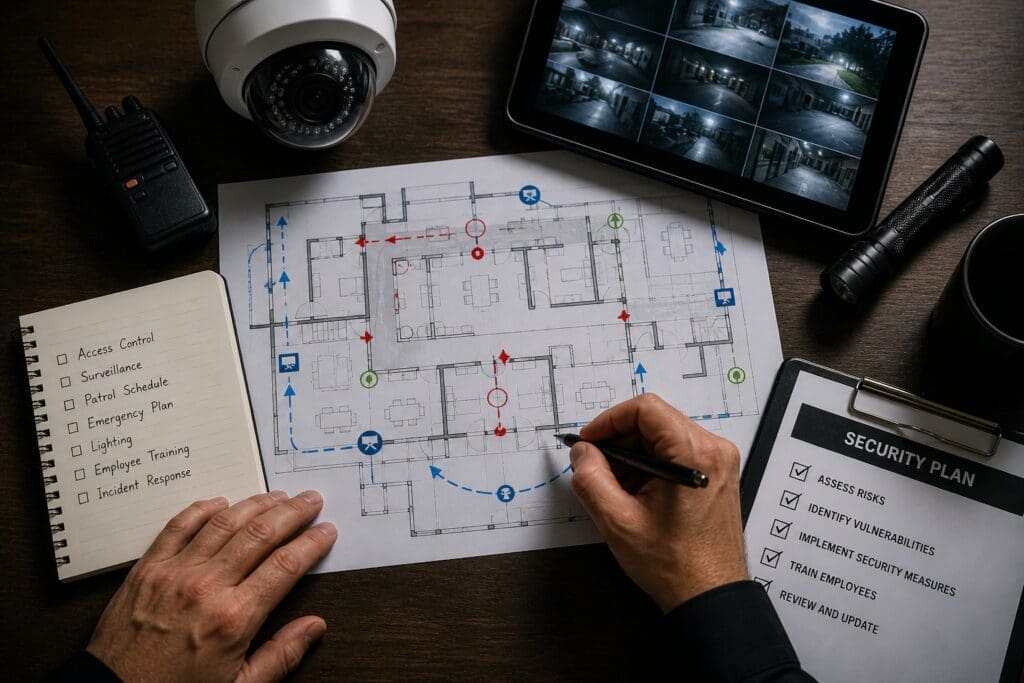
A practical step-by-step guide to protecting your people, property, operations, and reputation.
Most business owners think security starts with cameras.
Or locks.
Or alarms.
But real security starts with something far more important:
A plan.
Because cameras without strategy…
Guards without procedures…
Alarms without response…
Can still leave dangerous gaps.
The truth is:
Criminals often don’t target the biggest business.
They target the business that looks unprepared.
So if you own or manage a retail store, office building, warehouse, healthcare facility, construction site, apartment complex, logistics yard, or commercial property…
Here’s how to build a business security plan that actually works.
Step 1: Identify What Needs Protection
Before you protect anything…
Know exactly what’s at risk.
List your critical assets:
- Employees
- Customers
- Inventory
- Equipment
- Cash
- Sensitive documents
- Technology
- Vehicles
- Access credentials
- Operational data
Ask yourself:
“If this disappeared tomorrow… what would hurt the business most?”
That’s where your security priorities begin.
Step 2: Identify Your Biggest Threats
Every business faces different risks.
Common threats include:
- Theft
- Break-ins
- Vandalism
- Trespassing
- Workplace violence
- Unauthorized access
- Internal theft
- Property damage
- Data breaches
- After-hours intrusion
Ask:
- Have we had incidents before?
- What happens in our area?
- What are competitors experiencing?
- Which threats are most likely?
Security planning starts with realistic threats—not assumptions.
Step 3: Walk Your Property Like A Criminal Would
Look at your property through different eyes.
Walk your site during:
- Daytime
- Closing hours
- Overnight
- Weekends
Look for:
- Blind spots
- Poor lighting
- Hidden entrances
- Easy escape routes
- Unsecured gates
- Weak fencing
- Side access
- Employee-only entrances
Ask:
“If someone wanted easy access… where would they start?”
Step 4: Secure Every Access Point
Most businesses protect the front.
Criminals usually don’t use the front.
Check:
- Main entrances
- Side doors
- Rear exits
- Loading docks
- Basement access
- Roof access
- Windows
- Emergency exits
Use:
✔ Commercial-grade locks
✔ Access control systems
✔ Visitor logs
✔ Badge access
✔ Key accountability
Red flags:
🚩 Shared door codes
🚩 Former employees with access
🚩 Doors that don’t latch
Step 5: Strengthen Visibility
Criminals hate exposure.
Walk your property after dark.
Check:
- Parking lots
- Side alleys
- Rear exits
- Dumpster areas
- Delivery zones
- Stairwells
Use:
✔ LED perimeter lighting
✔ Motion lights
✔ Visible CCTV
✔ Security signage
A property that looks watched often gets skipped.
Step 6: Build A Surveillance Strategy
Cameras should do more than record.
They should deter.
Place cameras near:
- Entrances
- Parking areas
- Inventory storage
- Hallways
- Cash handling areas
- Blind corners
- Loading zones
Ask:
- Are cameras visible?
- Are there blind spots?
- Is night footage clear?
- Is someone reviewing footage?
Step 7: Train Your Employees
Your team is your first line of defense.
Employees should know how to identify:
- Suspicious vehicles
- Loitering individuals
- Door testing
- Unusual questions
- Unauthorized visitors
- Surveillance behavior
Train them on:
✔ Reporting procedures
✔ Visitor verification
✔ Emergency protocols
✔ Information security
Security awareness should become culture.
Step 8: Create An Incident Response Plan
If something happens tonight…
What happens next?
Every business should have clear procedures for:
- Suspicious persons
- Theft
- Trespassing
- Medical emergencies
- Fire alarms
- Workplace disturbances
- Access breaches
Define:
- Who responds
- Who gets called
- Who documents
- Who escalates
Because detection without response creates vulnerability.
Step 9: Use Patrols And Physical Presence
Technology is powerful.
Human presence changes behavior.
Security patrols help:
✔ Deter crime
✔ Identify vulnerabilities
✔ Respond quickly
✔ Verify alarms
✔ Check locks
✔ Document incidents
Random patrol schedules work best.
Predictability creates opportunity.
Step 10: Review And Update Your Plan Regularly
Businesses change.
Risks change.
Your security plan should too.
Review quarterly:
- New employees
- New access points
- New equipment
- New operating hours
- Recent incidents
- Seasonal risks
A plan that worked last year…
May not protect you tonight.
What Does A Strong Security Plan Include?
Businesses criminals often avoid usually have:
✔ Bright exterior lighting
✔ Controlled access
✔ Visible surveillance
✔ Trained employees
✔ Incident procedures
✔ Random patrols
✔ Professional risk assessments
✔ Strong leadership accountability
That’s where Churchgate Protective Services helps businesses stay ahead with:
- Licensed security professionals
- Mobile patrol services
- Risk-based security planning
- Access control support
- Surveillance audits
- Customized protection strategies
Does Your Business Have A Plan… Or Just Equipment?
Ask yourself:
- Could your team handle an incident tonight?
- Would someone notice suspicious activity?
- Are your vulnerabilities documented?
- Are your procedures clear?
- Does your property look protected after dark?
Because criminals don’t look for the biggest opportunity.
They look for the easiest one.
Schedule Your Free Security Assessment Today
Build a security plan before someone else finds the gaps.