House of Worship Security in Brooklyn: Protecting Congregations During Holiday Services
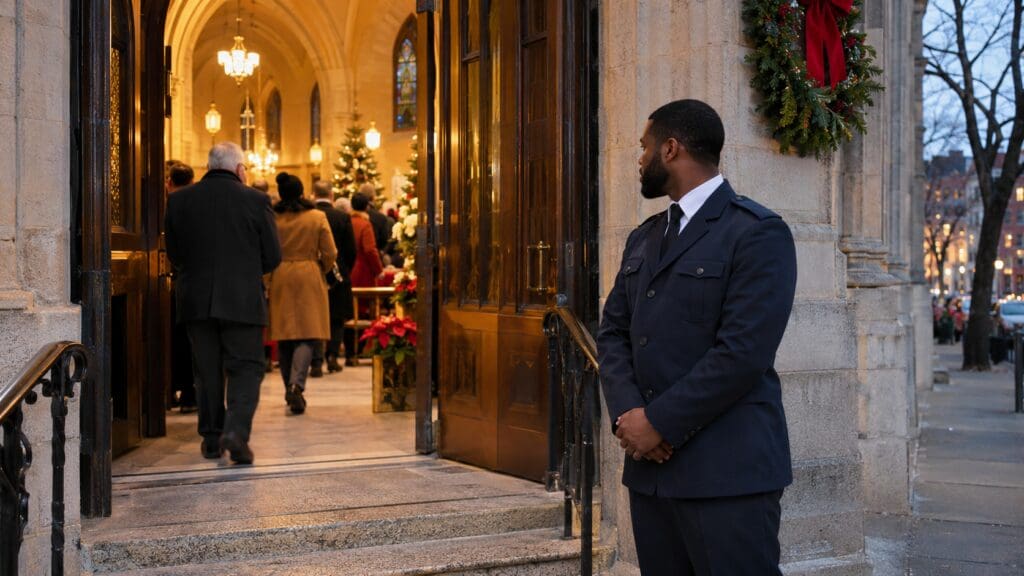
Holiday services bring larger congregations, first-time visitors, volunteers, children, elderly worshippers, and community guests into Brooklyn churches, synagogues, mosques, and other religious facilities. A well-planned security presence can help protect everyone while preserving the welcoming and peaceful atmosphere of the service.
The best house of worship security plan combines controlled access, attentive personnel, clear emergency procedures, unobstructed exits, and coordination among religious leaders, ushers, volunteers, and licensed security guards.
Why Holiday Services Require Additional Security Planning
Christmas services, Hanukkah gatherings, New Year’s observances, concerts, community meals, and other seasonal programs may attract significantly more people than regular weekly services.
Potential concerns include:
- Unattended entrances and side doors
- Unfamiliar or disruptive visitors
- Overcrowded halls, foyers, and sanctuaries
- Blocked aisles or emergency exits
- Theft from coat rooms, offices, or parked vehicles
- Lost children or separated family members
- Medical emergencies involving elderly attendees
- Suspicious packages or unattended bags
- Conflicts near entrances and parking areas
- Fire-alarm or sprinkler problems
- Severe winter weather
- Hate-related threats or vandalism
The goal is not to make worshippers feel watched. Security should remain calm, respectful, and integrated into the congregation’s normal hospitality procedures.
Brooklyn House of Worship Security Checklist
1. Conduct a Pre-Service Security Assessment
Walk through the property before the holiday schedule begins. Include religious leaders, facility managers, ushers, security personnel, and emergency coordinators in the assessment.
Review:
- Main, side, and rear entrances
- Emergency exits and evacuation routes
- Sanctuary seating and aisles
- Children’s ministry and classroom areas
- Administrative offices
- Coat rooms and storage spaces
- Parking areas and passenger drop-off points
- Exterior lighting
- Fire alarms, sprinklers, and extinguishers
- Security cameras and access-control systems
- Areas where crowds may form
Correct broken locks, poor lighting, camera blind spots, blocked exits, and other problems before attendance increases.
2. Establish a Welcoming Entry Process
A controlled entrance does not need to feel unfriendly. Trained greeters, ushers, and guards can welcome attendees while observing behavior and keeping unauthorized individuals away from restricted areas.
CISA’s guidance for houses of worship recommends using friendly engagement—sometimes called the “Power of Hello”—to welcome visitors while identifying behavior that may require additional attention. cisa.gov
During busy services:
- Keep the primary public entrance clearly identified.
- Monitor secondary entrances instead of leaving them unattended.
- Lock doors that are not needed, without blocking emergency exits.
- Provide a clear procedure for late arrivals.
- Keep staff-only areas secured.
- Make sure greeters know who to contact when they notice a concern.
Security personnel should evaluate behavior rather than make assumptions based on someone’s appearance, religion, ethnicity, clothing, or background.
3. Use Licensed, Hospitality-Oriented Security Guards
House of worship security requires good judgment and strong communication skills. Guards should understand that they are working in a sensitive, community-focused environment.
Before hiring a security company, ask:
- Are the guards properly registered in New York?
- Do they have experience with religious or community events?
- Will they receive written post instructions?
- Can they communicate respectfully with worshippers?
- Is a supervisor available during major services?
- How will incidents be reported?
- Is replacement staffing available?
- Does the company carry appropriate insurance?
An unarmed guard may be appropriate for access control, visible deterrence, patrols, incident reporting, and emergency coordination. The staffing plan should be based on the property, attendance, service format, existing risks, and number of access points.
Learn more about Churchgate Protective Services and its professional security support for Brooklyn organizations.
4. Assign Clear Security Positions
Avoid asking one person to watch several important areas simultaneously. A guard stationed at the entrance cannot reliably patrol the sanctuary, monitor a rear door, and supervise the parking area at the same time.
Depending on the congregation and building, security positions may include:
- Primary entrance
- Sanctuary or main worship area
- Children’s ministry area
- Interior patrol
- Parking area
- Clergy or staff entrance
- Community hall
- Exterior perimeter
A smaller service may need only one carefully positioned guard. A large holiday gathering with multiple entrances and programs may require several guards and a supervisor.
5. Protect Children and Vulnerable Worshippers
Children’s areas should have controlled pickup and release procedures. Visitors should not be permitted to enter classrooms, nurseries, or youth spaces without authorization.
Consider using:
- Parent and child identification tags
- Volunteer check-in records
- Controlled classroom doors
- Designated pickup locations
- Approved volunteer lists
- A two-adult supervision policy
- Written lost-child procedures
Security personnel should know how to contact ministry leaders without unnecessarily alarming the congregation.
6. Monitor Occupancy and Keep Exits Clear
Holiday decorations, extra chairs, audio equipment, donation boxes, and seasonal displays must not obstruct aisles or exits.
Confirm that:
- Attendance remains within the approved occupancy.
- Exit doors are operational and unobstructed.
- Exit signs remain visible.
- Temporary seating does not narrow evacuation routes.
- Decorations are kept away from heat and ignition sources.
- Stairwells and corridors remain clear.
- Wheelchair users and elderly attendees have accessible routes.
New York City requires qualifying assembly spaces to maintain appropriate Place of Assembly approval, with oversight involving both the Department of Buildings and FDNY. Buildings Congregations should confirm their building-specific requirements with qualified professionals and the appropriate city agencies.
7. Prepare Written Emergency Procedures
Every house of worship should have clear procedures for emergencies that could occur during a service.
Plans should address:
- Medical emergencies
- Fire or smoke
- Severe winter weather
- Power failure
- Suspicious behavior
- Threatening communications
- Unattended packages
- Missing children
- Disorderly visitors
- Evacuation
- Shelter-in-place situations
- Fire-alarm or sprinkler impairment
CISA recommends assigning responsibilities in advance, including who will notify religious leaders, summon emergency services, secure doors when appropriate, and guide congregants to safety. cisa.gov
Guards, ushers, clergy, and key volunteers should know the property’s exact address, emergency contact numbers, evacuation routes, and outdoor assembly location.
8. Coordinate With Local Law Enforcement
For major holiday services, religious leaders may contact their local NYPD precinct’s community affairs or crime-prevention personnel.
Consider:
- Sharing the holiday service schedule
- Requesting a facility security review
- Providing updated emergency contacts
- Inviting appropriate responders to become familiar with the building
- Reporting credible threats immediately
- Documenting suspicious activity
Call 911 when there is an immediate threat, crime in progress, fire, or medical emergency. Non-emergency concerns should be reported through the appropriate local channels.
The NYPD crime-prevention resource page also provides public safety information for New York City organizations and residents. NYPD
9. Secure Donations and Valuable Property
Holiday services may involve cash donations, musical equipment, audiovisual systems, laptops, and personal belongings.
Practical safeguards include:
- Using tamper-resistant donation containers
- Limiting access to collection-counting rooms
- Requiring two authorized people when handling cash
- Moving collections promptly to a secured area
- Locking offices and storage rooms
- Monitoring coat rooms
- Recording equipment serial numbers
- Avoiding public discussion of cash-handling procedures
Security guards can help protect collection areas and control access, but financial handling should remain the responsibility of authorized congregation personnel.
10. Document and Review Incidents
Security personnel should document significant events, even when police assistance is not required.
Reports may include:
- Date and time
- Location
- Individuals involved
- Objective description of what occurred
- Actions taken
- Witness information
- Emergency services contacted
- Recommended follow-up
After the holiday season, leadership should review the reports and identify changes needed for future services.
Common Security Mistakes to Avoid
Avoid these preventable problems:
- Leaving side entrances unattended
- Relying entirely on volunteers without training
- Blocking exits with decorations or extra seating
- Failing to control children’s areas
- Waiting for an incident before creating a plan
- Assigning one guard to too many locations
- Hiring personnel without verifying credentials
- Giving guards no written instructions
- Failing to coordinate with ushers and clergy
- Using aggressive tactics that unnecessarily frighten worshippers
Frequently Asked Questions
Does a small Brooklyn church need a security guard?
Not every small congregation needs a dedicated guard. Security may be appropriate when attendance increases, the building has several entrances, valuable property is present, previous incidents have occurred, or leadership has received a specific concern or threat.
Should a house of worship use uniformed or plainclothes guards?
Uniformed guards provide visible deterrence and are easy to identify during an emergency. Plainclothes guards may provide a more discreet presence. Some large services benefit from using both approaches.
How many guards are needed for a holiday service?
There is no universal guard-to-attendee ratio. Staffing should consider attendance, entrances, building layout, children’s programs, parking coverage, service length, known risks, and whether several activities occur simultaneously.
Can volunteers replace licensed security guards?
Volunteers can support hospitality, communication, and emergency procedures. However, they should not be assigned professional security duties beyond their training or legal authority. Licensed guards provide dedicated observation, reporting, access control, and incident response.
Should security guards carry weapons?
That decision requires a careful risk assessment, qualified legal and insurance guidance, and appropriately licensed personnel. Many Brooklyn congregations use professional unarmed guards to maintain a welcoming environment while improving access control and emergency readiness.
Protect Your Brooklyn Congregation
Security should support worship—not interrupt it. A calm, properly briefed team can welcome visitors, monitor entrances, keep restricted spaces protected, and respond quickly when assistance is needed.
Churchgate Protective Services provides professional unarmed security, access control, patrols, incident reporting, and security planning for churches and other houses of worship throughout Brooklyn and New York City.
To discuss holiday service security, contact:
Churchgate Protective Services
747 Lexington Ave., Suite 1
Brooklyn, NY 11221
Phone: (718) 498-5960
Email: info@churchgatecorp.com
Website: churchgateprotective.com