Mobile Patrol vs. Fixed-Post Guards: Which Is More Cost-Effective?
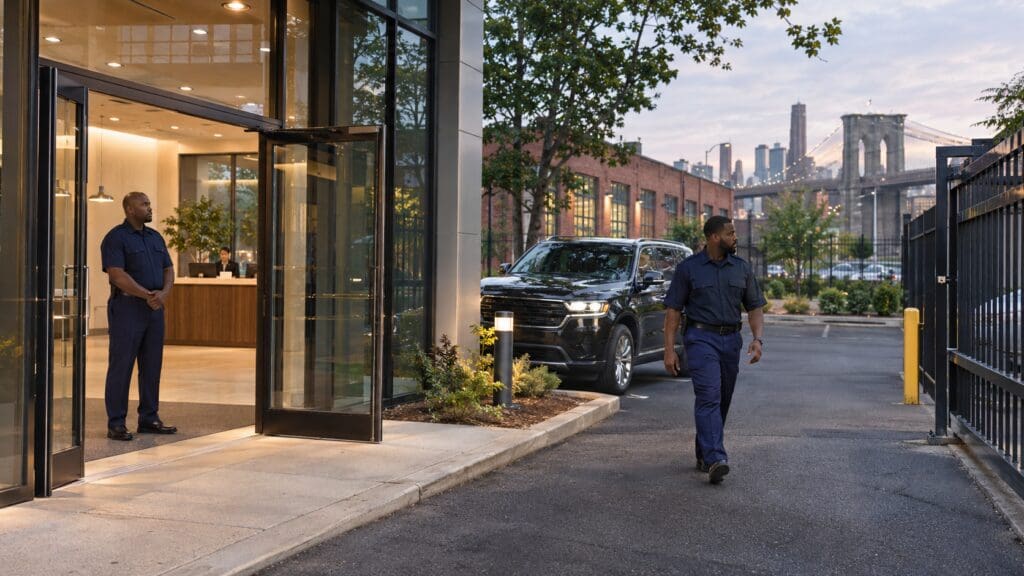
Mobile patrols are usually more cost-effective for properties that need visible security checks at scheduled or random intervals but do not require a guard to remain on-site continuously. Fixed-post guards generally cost more because they provide dedicated coverage for an entire shift, but they may offer better value for busy entrances, occupied buildings, high-value properties, and locations that need immediate response.
For many Brooklyn properties, the most efficient solution is a hybrid plan: a fixed-post guard during high-activity hours and mobile patrols overnight or during lower-risk periods.
The right choice depends on the property layout, operating hours, access points, incident history, occupancy, and the responsibilities assigned to the guard—not price alone.
Quick Comparison
| Security need | Mobile patrol | Fixed-post guard |
|---|---|---|
| Continuous on-site presence | No | Yes |
| Scheduled property checks | Yes | Yes |
| Randomised patrol visits | Yes | Limited to assigned property |
| Visitor and delivery management | Limited | Yes |
| Immediate on-site response | Only when present | Yes |
| Multiple properties | Cost-effective | Separate staffing usually required |
| Lobby or front-desk coverage | No | Yes |
| Opening and closing inspections | Yes | Yes |
| Overnight perimeter checks | Yes | Yes |
| Continuous construction-site coverage | Limited | Yes |
| Visible deterrence | Intermittent | Continuous |
| Lower basic staffing cost | Usually | Not usually |
What Is a Mobile Security Patrol?
A mobile patrol guard travels between assigned properties in a marked or unmarked patrol vehicle. The guard visits each location according to a planned schedule, randomised route, alarm request, or management instruction.
During a patrol visit, the guard may:
- Inspect entrances and gates
- Check doors, windows, fences, and locks
- Walk the exterior perimeter
- Look for trespassing or vandalism
- Check loading docks and parking areas
- Confirm that lights and alarms appear operational
- Document maintenance or safety problems
- Respond to alarm notifications
- Conduct opening or closing checks
- Complete a digital patrol report
The guard then leaves for the next assigned property.
Mobile patrols do not provide uninterrupted security. There will be periods when no guard is physically present at the property.
What Is a Fixed-Post Security Guard?
A fixed-post guard remains assigned to one property or security position for a defined shift.
A fixed post may be located at:
- A residential lobby
- A commercial reception desk
- A construction entrance
- A warehouse gate
- A retail store
- A hotel entrance
- A loading area
- An event entrance
- A security control room
The guard may remain at one station or conduct scheduled patrols within the property.
Fixed-post responsibilities may include:
- Monitoring entrances
- Verifying visitors
- Managing deliveries
- Checking employee credentials
- Enforcing property rules
- Monitoring security cameras
- Conducting interior and exterior patrols
- Responding to incidents
- Contacting emergency services
- Completing incident reports
- Assisting tenants, employees, or visitors
Because the guard is continuously assigned to the location, fixed-post coverage normally involves more labour hours than periodic mobile patrol visits.
Which Option Is More Cost-Effective?
Mobile Patrols May Be More Cost-Effective When:
- The property is closed overnight.
- The site has low visitor activity.
- Security is needed primarily for deterrence.
- Management wants several checks during the night.
- Multiple nearby properties need coverage.
- The main risks involve trespassing, vandalism, or unsecured doors.
- Cameras and alarms already cover the site.
- A guard is not required to manage access continuously.
- The property needs opening and closing inspections.
- The security budget does not support a full overnight post.
A property may receive several patrol visits without paying for a guard to remain there for an entire shift.
Fixed-Post Guards May Be More Cost-Effective When:
- People enter and leave throughout the shift.
- Every visitor or vehicle must be verified.
- The property contains high-value inventory or equipment.
- There have been repeated security incidents.
- Tenants, employees, or customers regularly need assistance.
- The building has multiple active responsibilities.
- Immediate on-site response is important.
- Deliveries must be logged and controlled.
- A construction or warehouse gate cannot be left unattended.
- Security-camera alerts require constant review.
Although the hourly cost may be higher, a fixed-post guard can perform several functions simultaneously. Replacing that guard with separate reception, access-control, patrol, and incident-response services may not create real savings.
The Main Cost Factors
Security pricing should be based on the work required, not simply the words “mobile” or “fixed.”
1. Number of Coverage Hours
A fixed-post guard assigned for eight hours creates eight guard-hours of coverage. A mobile patrol charge may be based on the number, duration, timing, and location of visits.
2. Property Location
Travel distance, traffic, parking, tolls, and the availability of guards may affect pricing.
A group of properties located close together may be more economical to patrol than sites spread across several parts of New York City.
3. Frequency of Patrol Visits
One nightly inspection costs less than several visits spread throughout the night. Randomised patrols may also require more scheduling flexibility.
4. Length of Each Visit
A quick exterior vehicle patrol is different from a full inspection involving:
- A perimeter walk
- Multiple floors
- Mechanical areas
- Parking facilities
- Interior checkpoints
- Photographs
- A detailed digital report
The scope should be clearly defined in the contract.
5. Number of Security Positions
A fixed guard at the lobby cannot simultaneously remain at a loading dock across the property. Larger buildings may need multiple positions or a combination of posts and patrols.
6. Time of Day
Overnight, weekend, holiday, and emergency coverage may be priced differently from regular weekday service.
7. Property Risk
Properties containing valuable goods, sensitive information, expensive equipment, controlled materials, or large crowds may require more experienced personnel, closer supervision, or additional procedures.
8. Required Duties
The more responsibilities assigned, the more important it becomes to calculate whether one guard can complete them safely and consistently.
9. Supervision and Reporting
Professional coverage may include:
- Field-supervisor visits
- GPS patrol verification
- Electronic checkpoints
- Digital incident reports
- Time-stamped photographs
- Management notifications
- Emergency escalation
- Replacement staffing
The cheapest quote may exclude services that property managers actually need.
Where Mobile Patrols Work Best
Closed Commercial Buildings
A mobile guard can check doors, windows, lighting, loading areas, and parking facilities after employees leave.
Small Construction Sites
Mobile patrols may be appropriate for lower-risk sites with secure fencing, cameras, lighting, and locked equipment storage.
However, larger projects with valuable materials, repeated trespassing, or regular overnight deliveries may need continuous coverage.
Vacant Properties
Scheduled patrols can identify:
- Broken windows
- Forced entry
- Water leaks
- Fire damage
- Unauthorised occupancy
- Vandalism
- Open doors
- Failed lighting
Retail Properties After Closing
A patrol guard may inspect storefronts, rear doors, delivery areas, and parking spaces after the businesses close.
Multiple Properties Under One Management Company
Mobile patrols can be efficient when a property manager operates several nearby buildings. The patrol plan should still provide enough time for a meaningful inspection of each location.
Parking Areas
Mobile patrols can provide intermittent visibility across parking lots or garages. Properties needing constant access management or customer assistance may require a fixed guard instead.
Where Fixed-Post Guards Work Best
Residential Buildings
A lobby guard may:
- Monitor building access
- Verify visitors
- Manage deliveries
- Assist residents
- Observe package activity
- Document incidents
- Contact management
A mobile patrol cannot provide the same continuous lobby presence.
Warehouses and Delivery Hubs
Fixed-post guards may be needed to verify drivers, record vehicles, protect loading areas, and control entry throughout the shift.
Active Construction Sites
A fixed guard may be more suitable when workers, contractors, deliveries, and vehicles regularly enter the property.
Hotels
Hotels operate around the clock and may experience a steady flow of guests, visitors, vendors, and deliveries. Continuous coverage can provide faster assistance and incident response.
Retail Stores
A fixed guard offers visible deterrence and can respond immediately to disruptive behaviour, suspected theft, or employee-safety concerns.
Events
Event security positions usually need to remain staffed. Entrances, restricted areas, crowd zones, and exits cannot be protected through occasional drive-by visits.
The Hybrid Security Model
A hybrid plan combines fixed-post guards and mobile patrols.
For example:
- A lobby guard works from 4:00 PM to midnight.
- Mobile patrols check the exterior between midnight and 6:00 AM.
- Cameras continue recording throughout the night.
- Management receives reports from both services.
Another plan might include:
- A fixed guard at a warehouse gate during shipping hours
- Mobile perimeter patrols after the warehouse closes
- Alarm-response service overnight
- Additional fixed coverage during the holiday season
This approach concentrates labour hours where the risk and activity are highest.
CISA recommends a layered approach to physical security, using multiple measures such as guards, surveillance, access controls, and physical barriers rather than relying on one control alone.
Questions to Ask Before Choosing
How Long Can the Property Be Left Without a Guard?
If the answer is “not at all,” fixed-post coverage is likely necessary.
Does Someone Need to Verify Every Visitor?
Continuous access control requires a fixed position. A mobile guard cannot verify arrivals while serving another property.
What Happens Between Patrol Visits?
Consider whether cameras, alarms, locks, lighting, and remote monitoring provide enough protection while the guard is away.
How Quickly Must Someone Respond?
A fixed-post guard is already on-site. A mobile response depends on the patrol officer’s location, traffic, current assignment, and priority level.
Does the Property Need Customer or Tenant Assistance?
A mobile guard primarily performs scheduled security checks. A fixed-post guard can provide ongoing assistance and communication.
How Large Is the Property?
One mobile visit may not provide enough time to inspect a large warehouse, residential complex, or multi-level garage properly.
Are Several Properties Located Nearby?
Mobile coverage becomes more economical when multiple sites can be included in an efficient patrol route.
Hidden Costs to Consider
Missed Incidents
A low-cost patrol plan may not be economical if important areas remain unchecked or visits are too short to be meaningful.
Unclear Post Orders
Guards cannot perform consistently without written instructions. Unclear duties can lead to missed checks, reporting gaps, and disagreements over what the service includes.
Inadequate Staffing
Assigning one guard to a busy lobby, package room, parking area, and interior patrol may leave critical areas unattended.
Poor Reporting
If management receives no usable reports, recurring security and maintenance issues may continue without being corrected.
Unverified Guards
Individuals performing security-guard duties in New York generally must be appropriately registered and trained, subject to limited exemptions. New York’s requirements for unarmed guards include pre-assignment, on-the-job, and annual in-service training. Department of State
No Backup Coverage
Ask what happens if the assigned guard calls out, a patrol vehicle breaks down, or emergency conditions affect the normal schedule.
How to Compare Security Proposals
Request quotes based on the same scope of work. Otherwise, comparing prices may be misleading.
Each proposal should specify:
- Coverage hours
- Number of guards
- Patrol frequency
- Minimum time at each location
- Interior and exterior areas checked
- Checkpoint-verification method
- Alarm-response procedure
- Supervisor inspections
- Incident-reporting system
- Holiday rates
- Replacement staffing
- Vehicle charges
- Insurance
- Contract term
- Cancellation terms
Ask the provider to identify anything that is not included.
Example Security Plans
Small Brooklyn Office
Property conditions:
- Closed from 7:00 PM to 7:00 AM
- One main entrance
- Cameras and alarm system
- Limited valuable equipment
Potential plan: Mobile patrol visits during the night, plus opening or closing checks.
Apartment Building With Package Problems
Property conditions:
- Residents entering throughout the day
- Frequent deliveries
- Repeated package complaints
- Active lobby
Potential plan: Fixed-post lobby guard during peak delivery and evening hours, supported by cameras and access control.
Construction Site With Several Deliveries
Property conditions:
- Workers and vehicles entering daily
- Valuable tools and materials
- Large fenced perimeter
- Limited activity overnight
Potential plan: Fixed-post guard during operating hours and mobile patrols overnight.
Warehouse Operating Around the Clock
Property conditions:
- Continuous truck movements
- Driver verification
- High-value inventory
- Multiple active loading docks
Potential plan: Fixed-post gate and loading-area coverage, supplemented by interior patrols, cameras, access control, and supervisor visits.
Choose Coverage Based on Risk, Not Price Alone
Mobile patrols are often the more economical option for closed properties, multiple nearby locations, and sites needing periodic checks. Fixed-post guards offer greater value when access must be controlled continuously or an immediate on-site response is necessary.
A site-specific assessment can determine whether the best plan is mobile, fixed, or a combination of both.
Churchgate Protective Services provides professional unarmed guards, mobile patrols, access control, visitor management, construction-site security, and digital incident reporting throughout Brooklyn and New York City.
Churchgate Protective Services
747 Lexington Ave., Suite 1
Brooklyn, NY 11221
Phone: (718) 498-5960
Email: info@churchgatecorp.com
Website: churchgateprotective.com