Security Cameras vs. Security Guards: What Actually Stops Crime in Brooklyn Buildings?
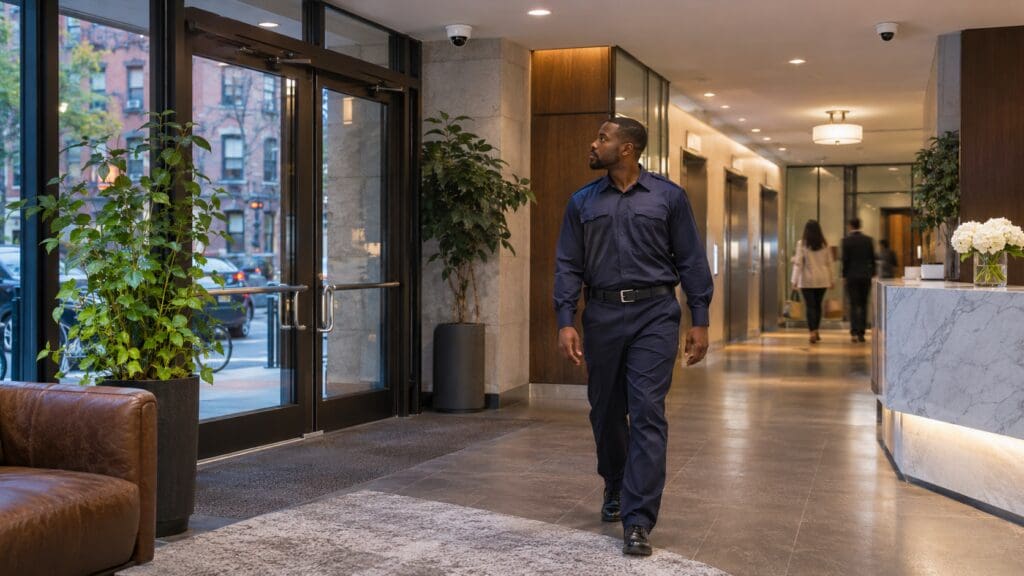
Security cameras record activity, provide evidence, and help building teams monitor several areas at once. Security guards provide a visible human presence, identify suspicious behaviour, enforce property rules, and respond while an incident is happening.
For most Brooklyn apartment buildings, commercial properties, construction sites, and mixed-use developments, the strongest approach is not choosing one over the other. It is combining trained security guards with properly placed cameras, access control, lighting, and clear response procedures.
Quick Answer: Are Cameras or Security Guards Better?
Security cameras are best for continuous monitoring, documentation, and reviewing incidents. Security guards are better for immediate intervention, visitor management, patrols, emergency response, and situations that require human judgement.
Neither option can prevent every incident. A layered security plan gives Brooklyn properties more protection because each measure supports the others. CISA recommends combining measures such as cameras, guards, physical barriers, and access controls instead of relying on a single security tool. cisa.gov
What Security Cameras Do Well
Modern security cameras can help building owners and property managers monitor entrances, lobbies, elevators, garages, loading areas, package rooms, hallways, and exterior spaces.
1. Cameras Create a Visible Deterrent
Clearly visible cameras may discourage some people from entering restricted areas or committing opportunistic theft, vandalism, or property damage.
However, a camera’s deterrent value depends on whether:
- The camera is visible
- The equipment appears operational
- The area is properly illuminated
- Warning signs are displayed where appropriate
- Someone reviews or monitors the footage
- Incidents receive a documented response
A camera that is broken, poorly positioned, or never reviewed offers limited practical protection.
2. Cameras Record Evidence
Video footage can help determine:
- When an incident occurred
- Which entrance was used
- What an individual was wearing
- Where a person travelled inside the building
- Whether a delivery was completed
- How property damage occurred
- Whether building procedures were followed
Recorded footage may assist property managers, insurers, investigators, and law enforcement. It should be stored securely and retained according to the building’s policies and applicable requirements.
3. Cameras Monitor Multiple Areas
A camera system can observe several areas at the same time. This is especially useful for large Brooklyn properties with multiple entrances, separate floors, parking areas, elevators, or loading zones.
Cameras may be appropriate for:
- Main and secondary entrances
- Reception areas
- Mail and package rooms
- Elevator lobbies
- Parking garages
- Bicycle storage rooms
- Loading areas
- Construction entrances
- Building perimeters
- Mechanical-room approaches
Cameras should not be placed in areas where occupants have a reasonable expectation of privacy.
4. Cameras Support Remote Oversight
Property managers can use camera systems to review activity without remaining on-site around the clock. Some systems can also send alerts for motion, door activity, or people entering defined areas.
Technology can identify unusual activity, but an alert still needs a response plan. Building management must decide who receives the alert, how quickly it should be reviewed, and when a guard, supervisor, police officer, or emergency service should be contacted.
Where Security Cameras Fall Short
Cameras can observe and record an event, but they cannot always stop it.
A camera cannot:
- Ask an unauthorized visitor to leave
- Escort someone away from a restricted area
- Assist a frightened tenant
- Separate people during an argument
- Check whether a door was left unsecured
- Direct occupants during an evacuation
- Provide first-hand information to emergency responders
- Adjust its response to a changing situation
If no one is actively monitoring the system, the incident may not be discovered until hours or days later.
Cameras may also have:
- Blind spots
- Poor nighttime visibility
- Obstructed views
- Network or power failures
- Insufficient storage
- Incorrect timestamps
- Weak passwords
- Damaged lenses
- Delayed alerts
Regular inspection and maintenance are essential.
What Security Guards Do Well
A trained guard can observe, evaluate, communicate, document, and respond. This human judgement is the main difference between a guard and a camera.
1. Guards Provide a Visible Presence
A professional security guard positioned near an entrance can discourage unauthorized entry, trespassing, package theft, vandalism, and disruptive behaviour.
The guard also makes security easy to find when tenants, employees, visitors, or vendors need assistance.
2. Guards Control Access
Brooklyn buildings often receive residents, employees, contractors, food deliveries, rideshare drivers, repair technicians, and visitors throughout the day.
A guard can:
- Verify visitor information
- Contact tenants or employees
- Check approved vendor lists
- Issue visitor credentials
- Monitor deliveries
- Protect staff-only areas
- Enforce building access procedures
- Document refused or suspicious entry attempts
Unlike an automated system, a trained guard can recognise when a visitor’s explanation does not match the building’s procedures.
3. Guards Conduct Patrols
A stationary camera sees only the area within its field of view. Guards can move through the property and check:
- Doors and gates
- Stairwells
- Hallways
- Garages
- Rooftop access
- Utility rooms
- Loading areas
- Fire exits
- Vacant spaces
- Construction materials
- Exterior perimeters
Randomised patrols can make security coverage less predictable.
4. Guards Respond Immediately
When an incident occurs, a guard may be able to:
- Notify building management
- Contact emergency services
- Preserve the incident area
- Provide directions to responders
- Assist with evacuation
- Observe and report relevant details
- Enforce site rules
- Protect tenants and staff from entering an unsafe area
Guards should work within their training, post orders, and legal authority. They are not substitutes for police officers, firefighters, or emergency medical personnel.
5. Guards Document Building Conditions
Security reporting is not limited to crime. Guards may document broken doors, failed lights, leaks, damaged fences, blocked exits, unattended packages, alarm activations, and unsafe conditions.
These reports help property managers identify recurring problems before they become more serious.
Where Security Guards Fall Short
One guard cannot physically observe an entire building at the same time.
Guard coverage may be limited by:
- Property size
- Number of entrances
- Multiple floors
- Break periods
- Patrol responsibilities
- Poorly written instructions
- Inadequate supervision
- Communication problems
- Insufficient staffing
This is where cameras become valuable. They extend a guard’s visibility and help supervisors review what happened before, during, and after an incident.
Individuals performing security-guard duties in New York generally must be appropriately registered and complete required training, subject to specific exemptions. Property owners should verify registration, training, supervision, and insurance before hiring a provider. Department of State
Security Cameras vs. Security Guards: Comparison
| Security need | Cameras | Security guards |
|---|---|---|
| Visible deterrence | Yes | Yes |
| Continuous recording | Yes | No |
| Immediate human response | No | Yes |
| Visitor verification | Limited | Yes |
| Incident evidence | Strong | Written observations |
| Interior and exterior patrols | Fixed coverage | Yes |
| Monitoring several locations | Yes | Limited without cameras |
| Emergency communication | Automated alerts only | Yes |
| Human judgement | No | Yes |
| Rule enforcement | No | Yes |
| After-hours documentation | Yes | Yes |
| Tenant assistance | No | Yes |
The Best Approach: Cameras and Guards Working Together
The strongest security plan allows the camera system and guards to support each other.
For example:
- A camera detects activity near a locked loading entrance.
- The guard receives or observes the alert.
- The guard checks the area from a safe position.
- Management or emergency services are contacted when necessary.
- The incident is documented in a written report.
- Recorded footage is preserved for review.
This combination provides detection, response, documentation, and follow-up.
The NYPD has also emphasised that CCTV systems work best when they are properly positioned, protected against tampering, and supported by trained personnel and clear monitoring instructions. nyc.gov
Recommended Security by Brooklyn Property Type
Apartment and Condominium Buildings
A practical plan may include:
- Cameras at entrances, package rooms and elevator lobbies
- A lobby guard or security-conscious front-desk officer
- Visitor verification procedures
- Package-delivery rules
- Scheduled interior and exterior patrols
- Incident reporting
Commercial Office Buildings
Consider:
- Lobby access control
- Employee credentials
- Visitor registration
- Cameras near entrances, elevators and loading areas
- Guard coverage during busy arrival and departure periods
- After-hours patrols
- Written procedures for terminated employees and unwanted visitors
Construction Sites
Construction properties may benefit from:
- Perimeter cameras
- Temporary lighting
- Locked tool and material storage
- Delivery verification
- Guard patrols during nights and weekends
- Equipment and key logs
- Monitoring of gates and vehicle entrances
Retail and Mixed-Use Properties
Coverage may include:
- Cameras at public entrances and point-of-sale areas
- Guard visibility during peak periods
- Loading-zone monitoring
- Rules for handling suspected theft
- Employee communication procedures
- Exterior patrols near closing time
Houses of Worship and Nonprofit Facilities
A balanced plan may include:
- Entrance cameras
- A welcoming uniformed guard
- Trained greeters
- Controlled children’s areas
- Emergency contact procedures
- Patrols during services and special events
- Protection of donation and administrative areas
How Many Cameras and Guards Does a Building Need?
There is no single formula that works for every property. The right plan depends on:
- Building size and layout
- Number of entrances
- Hours of operation
- Tenant population
- Public access
- Package volume
- Parking and loading areas
- Previous incidents
- Valuable equipment or materials
- Lighting conditions
- Existing locks and access controls
- Available security budget
A small controlled property may need cameras and limited guard coverage during the highest-risk hours. A large building operating around the clock may require multiple guards, active camera monitoring, access-control technology, and supervisor support.
Questions to Ask Before Investing
Before buying equipment or hiring a guard company, ask:
- What incidents are we trying to prevent?
- Which areas are most vulnerable?
- Who will monitor camera alerts?
- How quickly can someone respond?
- Are entrances properly secured?
- Are there camera blind spots?
- Is nighttime lighting adequate?
- How long will footage be retained?
- Who is authorised to access recordings?
- Are guards properly registered and trained?
- Will guards receive written post orders?
- How will incidents be documented and escalated?
The NYPD offers security surveys through local precinct crime-prevention officers. These evaluations can identify vulnerabilities involving doors, locks, lighting, windows, alarms, and other property conditions. NYPD
Frequently Asked Questions
Do security cameras prevent crime?
Visible cameras may discourage some opportunistic activity, but they cannot prevent every incident. Their effectiveness depends on placement, maintenance, monitoring, image quality, and whether there is a clear response procedure.
Is one security guard enough for an apartment building?
It depends on the property. One guard may cover a controlled lobby, but the entrance could be left unattended when that guard patrols another area. Larger buildings may need separate lobby and patrol positions or camera support.
Can AI cameras replace security guards?
AI-assisted cameras can flag motion or unusual activity, but they still require human review and a response plan. Technology cannot fully replace human judgement, communication, tenant assistance, or on-site emergency response.
Should cameras be monitored live?
Live monitoring may be useful for higher-risk areas, active construction sites, large buildings, and properties operating overnight. Recorded-only systems can still provide evidence, but they may not generate an immediate response.
What is better for package theft?
The most effective approach usually combines controlled package access, cameras, delivery procedures, proper lighting, resident communication, and guard or front-desk coverage during busy delivery periods.
Are security guards in New York required to be licensed?
Most individuals performing security-guard functions must be registered with the New York State Department of State and complete applicable training requirements, unless a specific exemption applies. Department of State
Build a Layered Security Plan for Your Brooklyn Property
Security cameras provide visibility and evidence. Security guards provide judgement, communication, patrols, and immediate response. When properly coordinated, they create a stronger security system than either option used alone.
Churchgate Protective Services provides professional unarmed security guards, access control, mobile patrols, front-desk coverage, construction-site security, event security, and digital incident reporting throughout Brooklyn and New York City.
Contact Churchgate Protective Services to discuss your property layout, operating hours, existing camera system, and security concerns.
Churchgate Protective Services
747 Lexington Ave., Suite 1
Brooklyn, NY 11221
Phone: (718) 498-5960
Email: info@churchgatecorp.com
Website: churchgateprotective.com