Warehouse & Last-Mile Delivery Hub Security in Sunset Park and Red Hook
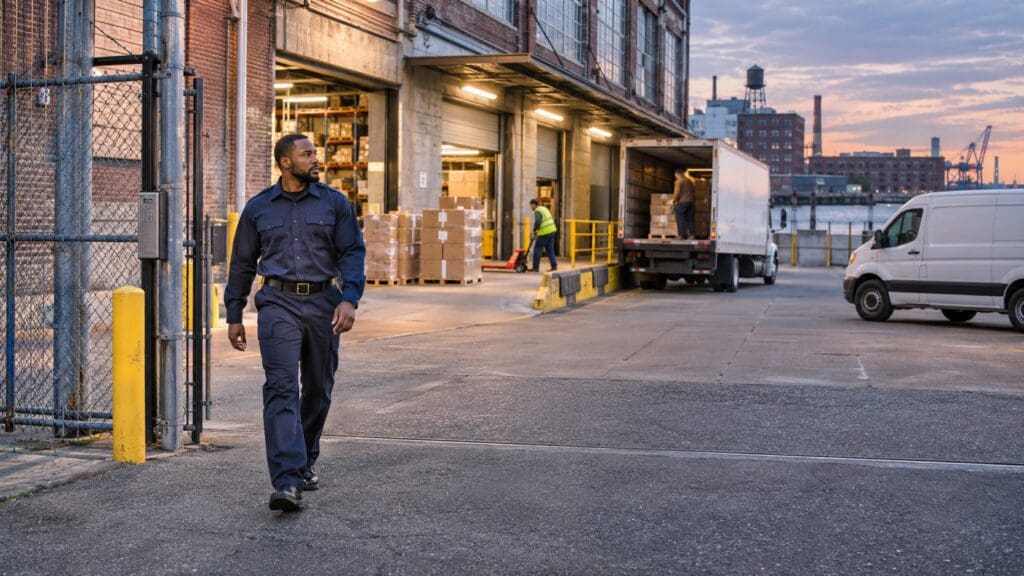
Warehouses and last-mile delivery hubs in Sunset Park and Red Hook operate in two of Brooklyn’s most active industrial areas. These facilities may handle thousands of packages, frequent truck movements, multiple delivery partners, temporary workers, valuable equipment, and tight delivery schedules.
An effective warehouse security plan should protect inventory without delaying operations. The strongest approach combines trained security guards, controlled access, delivery verification, camera coverage, lighting, perimeter protection, incident reporting, and clear procedures for employees, drivers, contractors, and visitors.
Why Warehouse Security Matters in Sunset Park and Red Hook
Sunset Park and Red Hook are attractive locations for logistics operations because they provide access to Brooklyn, Manhattan, major truck routes, industrial properties, and the waterfront.
The NYC Department of City Planning has identified Red Hook and Sunset Park as desirable areas for last-mile delivery facilities serving Brooklyn and Manhattan. lMarket Assessment Red Hook has also experienced increased warehouse and delivery activity connected with the growth of e-commerce. nyc.gov
However, the same activity can create security challenges:
- Large volumes of packages moving quickly
- Multiple vehicles entering and leaving
- Temporary and seasonal workers
- Drivers from different delivery companies
- Unattended loading docks
- High-value merchandise
- After-hours operations
- Trucks parked on surrounding streets
- Shared industrial properties
- Limited visibility around large buildings
- Coastal flooding and severe-weather exposure
Security should support fast operations while creating a clear record of who entered, what was collected, and when goods left the property.
Common Security Risks at Brooklyn Warehouses
Cargo and Package Theft
Packages may be most vulnerable while they are:
- Waiting at a loading dock
- Staged for delivery
- Transferred between vehicles
- Left inside an unlocked trailer
- Stored near an unsecured exit
- Returned after a failed delivery
- Awaiting inventory reconciliation
Small, high-value products can be particularly difficult to track when hundreds or thousands of items move through a facility each shift.
Unauthorized Access
Warehouses often receive employees, contractors, truck drivers, maintenance personnel, delivery partners, vendors, and visitors.
Without a clear access procedure, someone may enter by:
- Following an employee through a door
- Using an expired credential
- Entering through an open loading bay
- Claiming to be a driver or contractor
- Using a shared key or access code
- Entering through an adjoining tenant’s space
A busy reception desk or loading dock should not rely solely on staff recognising every person.
Fraudulent Pickup Attempts
A person may arrive with vehicle information, reference numbers, or documentation that appears legitimate.
Security and shipping personnel should know how to handle:
- Last-minute driver substitutions
- Unexpected pickup requests
- Mismatched licence plates
- Incomplete delivery paperwork
- Altered collection numbers
- Requests to change the destination
- Drivers who refuse identification
- Attempts to collect goods outside scheduled hours
Guards should not approve shipments independently unless that responsibility is specifically included in the facility’s procedures. Their role may include verifying identity, recording vehicle details, and contacting an authorised shipping manager.
Employee and Contractor Theft
Not every loss comes from an unknown intruder. Inventory can also disappear through internal theft, collusion, process failures, or inaccurate recordkeeping.
Security procedures should apply consistently to:
- Permanent employees
- Temporary staff
- Contractors
- Supervisors
- Drivers
- Cleaning personnel
- Maintenance teams
- Vendors
Policies should be lawful, clearly communicated, and applied without discrimination.
Vehicle and Equipment Theft
Delivery vans, forklifts, pallet jacks, batteries, fuel, tools, vehicle parts, and handheld scanning devices may be targeted when left unsecured.
Vehicle keys should not be stored where unauthorised individuals can easily access them.
Vandalism and Property Damage
Large warehouse walls, gates, vehicles, and loading areas may be exposed during nights and weekends. Broken fencing, poor lighting, or an open gate can create an opportunity for trespassing and vandalism.
Safety and Operational Disruption
Security guards may also identify noncriminal conditions that could interrupt operations, including:
- Blocked exits
- Water leaks
- Damaged fencing
- Failed lighting
- Open loading doors
- Fire-alarm problems
- Suspicious odours
- Unattended vehicles
- Unsafe crowding at dispatch areas
Security reporting can help management address these conditions before they become more serious.
Warehouse Security Checklist
1. Complete a Site-Specific Security Assessment
Every facility has a different layout and workflow. A security assessment should examine:
- Vehicle entrances and exits
- Employee entrances
- Reception areas
- Loading docks
- Trailer yards
- Perimeter fencing
- Emergency exits
- Roof and utility access
- Inventory cages
- Server and communications rooms
- Key storage
- Camera locations
- Exterior lighting
- Adjacent businesses
- Nearby streets and loading zones
The assessment should be completed during both daytime and nighttime conditions. An area that appears secure during a busy shift may become poorly lit and isolated after operations slow down.
2. Control Every Entry Point
The facility should identify one primary employee entrance and a separate procedure for drivers, vendors, and visitors whenever possible.
Access-control procedures may include:
- Employee badges
- Visitor identification
- Temporary credentials
- Driver check-in
- Vendor appointment lists
- Vehicle registration
- Digital access logs
- Intercom-controlled doors
- Restricted-area credentials
- Escort requirements
Unused entrances should remain secured without blocking required emergency egress.
3. Verify Drivers and Vehicles
Before allowing a truck into the yard or releasing a shipment, confirm:
- Driver’s name
- Company name
- Government-issued identification
- Vehicle licence plate
- Trailer number
- Scheduled appointment
- Pickup or delivery reference
- Authorised destination
- Seal number, when applicable
- Name of the employee approving the movement
Unexpected changes should be verified through an established company contact—not solely through a number provided by the arriving driver.
4. Secure Loading Docks
Loading docks are among the most active and vulnerable areas in a warehouse.
Practical controls include:
- Keeping unused dock doors closed
- Restricting pedestrian access
- Marking driver waiting areas
- Using cameras with clear dock coverage
- Checking trailer seals
- Recording trailer arrivals and departures
- Separating returned merchandise
- Maintaining adequate lighting
- Preventing unsupervised access to staged goods
- Inspecting docks at the end of each shift
A guard assigned to the loading area should understand the shipping schedule and know who can approve exceptions.
5. Use Trained Security Guards
Professional warehouse guards may assist with:
- Gate and entrance control
- Driver verification
- Vehicle logs
- Employee and visitor check-in
- Interior patrols
- Perimeter patrols
- Loading-dock observation
- Alarm response
- Incident reporting
- Emergency communication
- Opening and closing inspections
New York generally requires individuals performing security-guard duties to be registered and trained, subject to limited exemptions. Unarmed guards must complete the applicable pre-assignment, on-the-job, and annual training requirements. Department of State
Before hiring a provider, verify:
- New York registration
- Relevant warehouse experience
- Insurance
- Supervisor availability
- Written post orders
- Digital reporting capabilities
- Backup staffing
- Communication equipment
- Escalation procedures
6. Create Written Post Orders
Every assigned guard should receive site-specific instructions.
Post orders should explain:
- Guard locations
- Patrol routes
- Shift schedules
- Access procedures
- Driver verification steps
- Restricted areas
- Delivery exceptions
- Key-control procedures
- Alarm-response procedures
- Emergency contacts
- Incident-reporting requirements
- When to contact management or 911
Instructions should identify who can authorise an after-hours pickup, unlock an inventory cage, approve an unexpected visitor, or change a vehicle’s destination.
7. Position Cameras Strategically
Cameras should support guards and warehouse procedures. They should not be treated as a complete replacement for on-site response.
Consider camera coverage for:
- Vehicle gates
- Employee entrances
- Visitor check-in
- Loading bays
- Trailer yards
- High-value storage
- Return-processing areas
- Shipping and receiving lanes
- Emergency exits
- Exterior property lines
Avoid relying on cameras that have poor nighttime visibility, blocked views, incorrect timestamps, or insufficient recording storage.
Footage access should be restricted to authorised personnel and governed by a written retention policy.
8. Protect High-Value Inventory
High-value or easily resold goods may require additional controls.
Options include:
- Locked inventory cages
- Limited access credentials
- Dual approval for entry
- Separate camera coverage
- Inventory movement logs
- Tamper-evident seals
- Regular reconciliation
- Controlled return processing
- Supervisor review of discrepancies
Security personnel should document access but should not replace the company’s inventory-control system.
9. Manage Employees and Temporary Workers
Seasonal demand may result in rapid hiring and more temporary workers.
Before a worker begins:
- Verify identity and employment status.
- Issue individual credentials.
- Explain restricted areas.
- Provide security and emergency instructions.
- Prohibit badge sharing.
- Establish a process for lost credentials.
- Deactivate access immediately after employment ends.
- Recover company keys, badges and equipment.
Departing employees should not retain access to the facility’s physical or digital systems.
10. Secure the Perimeter and Yard
Warehouse perimeters should be inspected regularly for:
- Damaged fencing
- Gaps beneath gates
- Broken locks
- Poor lighting
- Overgrown vegetation
- Unsecured trailers
- Graffiti or signs of trespassing
- Vehicles parked in restricted areas
- Objects positioned near walls or fences
- Open utility enclosures
Guard patrols should vary when possible rather than following the same exact route and schedule every night.
11. Protect Keys and Access Credentials
Maintain a record of:
- Who received each key
- What the key opens
- When it was issued
- When it was returned
- Lost or damaged keys
- Access-card activation and cancellation
Avoid shared badges and universal door codes. When a worker leaves, their access should be disabled promptly.
12. Prepare for Holiday and Peak-Season Volume
Peak shopping and delivery periods may increase:
- Inventory levels
- Temporary staffing
- Overnight operations
- Vehicle traffic
- Returned merchandise
- Driver substitutions
- After-hours pickups
- Pressure to bypass normal checks
Security procedures should not be abandoned simply because the warehouse is busy. Management may need to add temporary guards, create a second driver check-in position, or extend patrol coverage.
Security for Truck and Delivery Operations
Freight operations in New York City must also account for local truck routes, loading restrictions, parking rules, and street conditions.
NYC DOT provides official information about commercial vehicles, truck routes, loading zones, and delivery programs. Deliveries in New York City
Facility managers should:
- Give drivers approved approach routes.
- Review current truck restrictions.
- Prevent vehicles from blocking emergency access.
- Avoid leaving loaded vehicles unattended.
- Identify safe driver waiting areas.
- Keep gates clear of parked vehicles.
- Coordinate arrival schedules.
- Document vehicles that leave without completing check-out.
Security guards should not direct traffic from public streets unless trained and legally authorised to do so.
Flooding and Severe-Weather Security
Red Hook and parts of Sunset Park’s waterfront face coastal and storm-related risks. The City’s Red Hook Coastal Resiliency project is intended to reduce risks associated with coastal storm surge and sea-level rise. nyc.gov
Warehouse emergency planning should include:
- Flood-risk assessment
- Emergency contact lists
- Inventory relocation priorities
- Backup power procedures
- Protection of electronic access systems
- Safe shutdown procedures
- Vehicle relocation plans
- Employee accountability
- Alternative entrances
- Post-storm re-entry controls
- Protection of damaged or exposed inventory
NYC Emergency Management recommends knowing the property’s flood risk and monitoring official emergency alerts through Notify NYC. NYCEM
During an emergency, guards should follow written procedures and should not be asked to remain in conditions that are unsafe.
What Should Happen After an Incident?
After theft, trespassing, property damage, or a fraudulent pickup attempt:
- Protect people from immediate danger.
- Call 911 when appropriate.
- Notify the designated manager.
- Preserve camera footage.
- Secure affected doors or areas.
- Record witness information.
- Document vehicles and identifying details.
- Complete an incident report.
- Protect inventory records and access logs.
- Review what allowed the incident to occur.
- Update procedures when necessary.
Reports should contain objective facts rather than assumptions or accusations.
The NYPD offers crime-prevention services and security surveys that can help identify property vulnerabilities. Businesses may contact their local precinct and request assistance from a crime-prevention officer. NYPD
Common Warehouse Security Mistakes
Avoid these preventable errors:
- Leaving dock doors open when unused
- Allowing drivers to walk through warehouse areas
- Sharing keys or access cards
- Failing to deactivate former employees
- Using cameras without checking recorded footage
- Relying on one guard to cover several distant posts
- Accepting unexpected pickups without independent verification
- Failing to record licence plates and trailer numbers
- Ignoring broken fences or poor lighting
- Storing high-value products beside exterior doors
- Providing guards with no written instructions
- Failing to review incident reports
- Suspending security checks during busy periods
- Having no flood or power-failure plan
Protect Your Sunset Park or Red Hook Facility
Warehouse security should protect inventory without creating unnecessary delays. A properly planned program gives guards, drivers, employees, and managers clear procedures for access, deliveries, emergencies, and incident reporting.
Churchgate Protective Services provides professional warehouse security, access control, loading-dock coverage, mobile patrols, visitor management, and digital incident reporting throughout Brooklyn and New York City.
Churchgate Protective Services
747 Lexington Ave., Suite 1
Brooklyn, NY 11221
Phone: (718) 498-5960
Email: info@churchgatecorp.com
Website: churchgateprotective.com